
What Counts as Evidence in a UK Workplace Harassment Case?
What Counts as Evidence in a UK Workplace Harassment Case?

Let's start with a shocking truth: hundreds of employees with strong claims for workplace harassment UK choose not to act because they "don't have evidence." That lack of knowledge is the gap between inaction and the chance for taking action. If you are reading this article because you have suffered harassment, bullying, discrimination or victimisation at work, you will learn what the UK considers evidence, how you can legally and ethically collect evidence, and what to do if you fear you don't have evidence. This guide explains what practical steps you should take to evidence your experience, the type of documents and evidence that will be viewed as persuasive by the courts and solicitors and when it would be wise to seek advice from an employment lawyer
What is Considered Workplace Harassment Under UK Law?
The variety of different ways you could be harassed at work is varied, but understanding what counts as harassment under the law will ensure that you can link and collate incidents of harassment under the correct legal remit.
Legal Definition of Workplace Harassment
The Equality Act 2010 defines harassment as being "unwanted conduct related to a relevant protected characteristic which has the purpose or effect of violating an individual's dignity or creating an intimidating, hostile, degrading, humiliating or offensive environment". Workplace bullying can, depending on your individual circumstances, come under harassment protected by this Act. If harassment doesn't fall under the Equality Act, there are still further legal actions you may be able to rely on, through a grievance process, unfair dismissal claims, or even constructive dismissal claims.
Examples of Workplace Harassment
- Verbal abuse, insults or derogatory comments.
- Persistent bullying: exclusion, undermining, unreasonable criticism.
- Sexual harassment: unwanted touching, sexual jokes, suggestive messages.
- Discrimination: denying opportunities because of a protected characteristic.
- Online harassment: abusive emails, WhatsApp messages, social media posts.
- Victimisation: punishing someone for making a complaint or supporting a colleague.
Why is Evidence Important in Workplace Harassment Cases?
If you have filed a tribunal claim or raised an internal grievance claim, then tribunals and employers are very keen to see that what you are asserting is credible, chronological, and can be supported by evidence:
- Proof of a wider course of conduct rather than a one-off incident.
- Aid to provide an understanding of the background and purpose behind behaviour.
- Add weight to any tribunal decision and internal grievance findings.
- Prevent you from suffering adverse findings or accusations of misconduct on your part.
While one e-mail or incident can be compelling, what typically has a greater impact is patterns of behaviour, for example, contemporaneous diary entries, witness evidence, e-mails, etc. You can take help from
legal solicitors if you are not understanding the legal terms and facing any difficulty while dealing with such cases.
What Evidence Can Be Used to Prove Workplace Harassment?
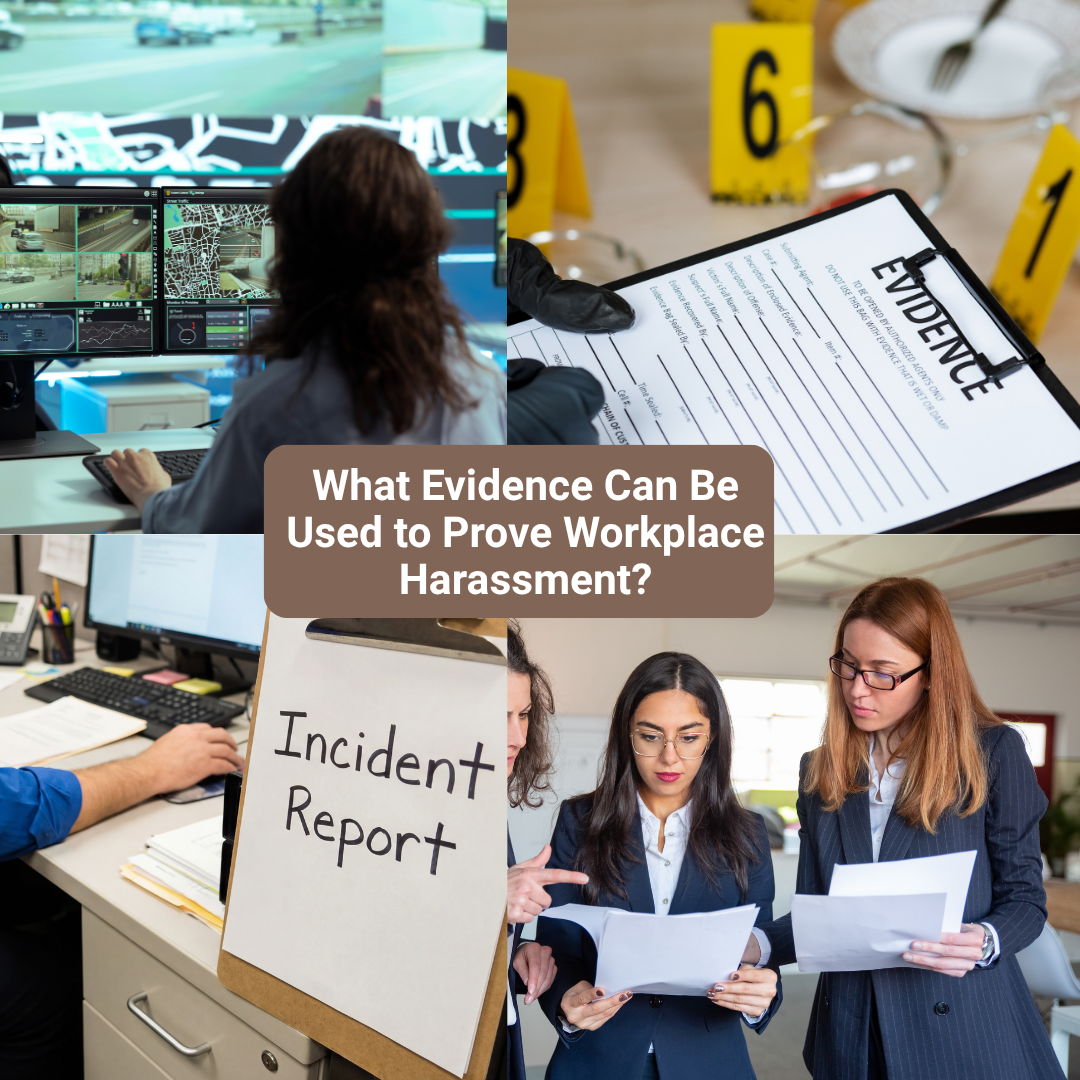
Below are the most commonly accepted forms of evidence, with practical notes on usability and limitations.
Emails, Text Messages and Social Media Messages
Why Useful
Text and email correspondence demonstrate what was communicated and on which dates and are frequently initial evidence for online and messaging app-based harassment claims.
Practical Tip
Do not edit or alter original documents such as message logs. Screenshots should also not be altered or edited. If messages are deleted, ask the employer for copies (if these were stored on their computers) or to keep hold of them for you. Ask any friends, family members or colleagues you were texting at the time to keep hold of texts too.
Employers' employment solicitors will nearly always ask for text message and/or email exchanges between employees at the beginning of an employment case.
Witness Statements From Colleagues
Why Useful
Individual third-party statements of observation may provide context for behaviours, behaviour patterns, and circumstances. The sworn declaration of a co-worker outlining how they heard/saw something could carry significant weight.
Practical Tip
Interview witnesses as close as possible to the events in question and request a dated, written note describing what the witness observed and/or heard at the time. A witness statement will be more impactful if it details who did what, where, and with whom. It should also outline any follow-up by the witness.
Diary or Written Record of Incidents
Why Useful
Taking notes of your interactions while they are still happening can serve as proof of patterns of behaviour as well as the timing.
How to Do It
Take notes of the date and time, location of each incident, any verbatim information exchanged in these interactions, and evidence you might possess (e.g., emails or screenshots). Never share these notes and ensure you save them to a non-company location in case the worst-case scenario occurs.
CCTV or Security Footage
Why Useful
An objective visual representation of any physical events or people in attendance.
Limitations
The employer holds any footage of you – and you can obtain this via a Subject Access Request (SAR) under the Data Protection Act, or by instructing your lawyer to procure this via pre-action disclosure.
Medical Records or GP Reports
Why Useful
Records from a GP, occupational health, or counsellor that show stress, anxiety or physical injury linked to workplace events support causation claims.
How to Obtain
You may need to provide consent for records disclosure. A solicitor can request medical evidence to corroborate your account.
HR Complaints and Internal Investigation Documents
Why It Matters
Grievances, meeting notes, investigation outcome documents, and disciplinary records all prove how your employer has acted and if they acted reasonably.
Top Tip
Keep copies of everything you send to and receive from HR. If they don't investigate correctly, then their lack of action can be evidence of that too.
You may find that Peterborough solicitors or family solicitors may also handle certain workplace cases if harassment touches on family law or immigration cases.
Performance Reviews Linked to Harassment
Why It Helps
If appraisal language takes sudden turns for the worse, a low rating comes out of the blue, or action is taken against you after you file an internal complaint, it might be a form of victimisation.
What to Identify
Times of the appraisals, names of the people assessing, any difference between your measured performance and what was reported.
Is Recording Your Audio and/or Video Legal?
Recorded conversations are allowed in employment tribunals, although you should consider both the legality and practicalities.
Private Recordings
You can, in the UK, covertly record a conversation, provided you are a party to it. This recording will be admitted into a tribunal if it is relevant and fairly obtained.
Public/Private Spaces
If your recording takes place in someone's private space (home, office, etc), this raises privacy issues and may breach your terms of employment.
Consider practicalities and get advice.
Employment solicitors will guide whether a particular recording can be used
How to Collect Evidence Without Breaking the Law?
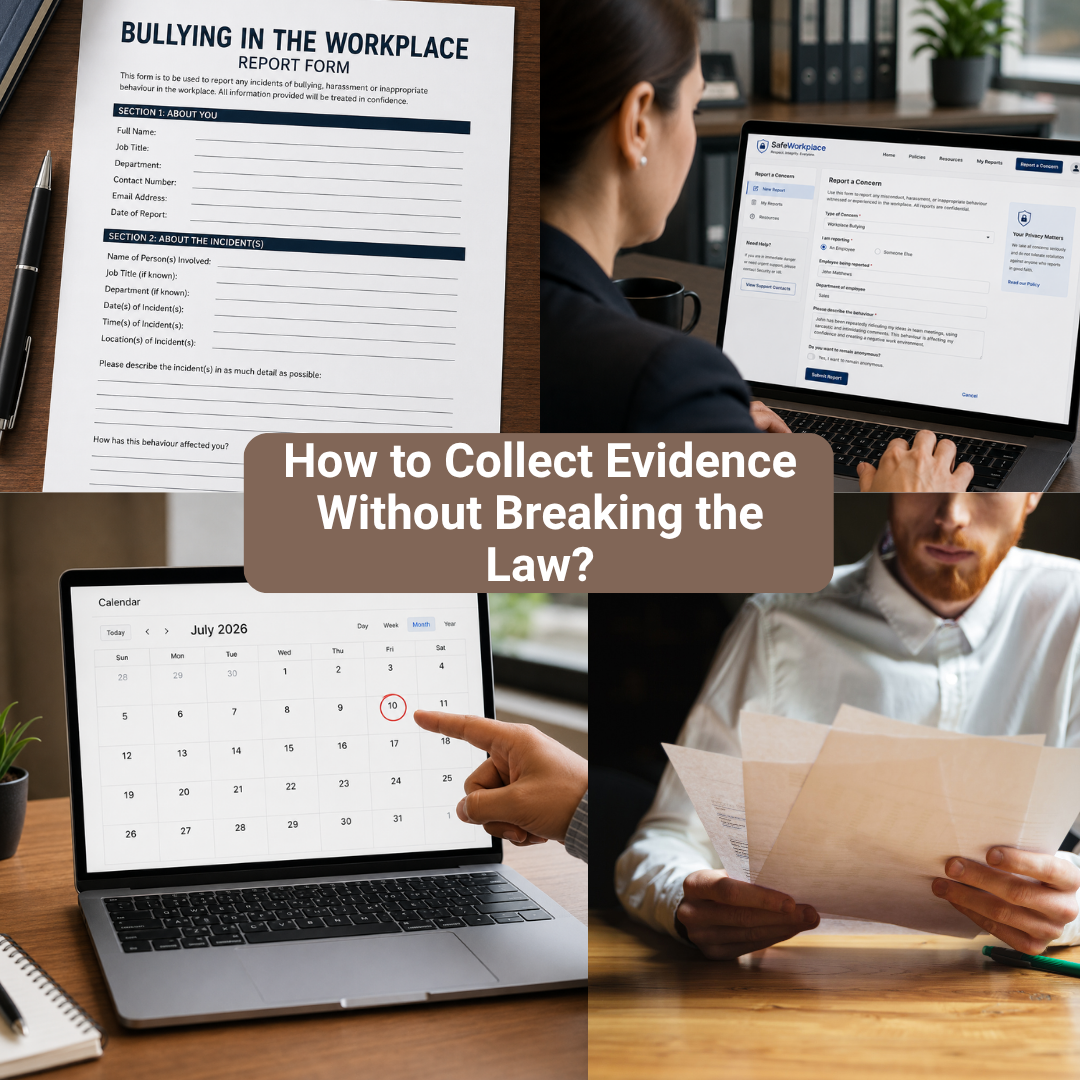
Collecting evidence carefully matters almost as much as the evidence itself. Follow these practical steps:
Keep Original Documents
Preserve original emails, letters and files. If you print them, keep the digital copies too. Originals are harder for an employer to dispute.
Record Dates, Times and Locations
A clear timeline helps tribunal judges understand repetition and escalation. Use a calendar or dated diary and reference related emails or meetings.
Avoid Editing Screenshots or Messages
Edited screenshots are less credible. If you must take screenshots, capture entire threads and include timestamps. If you annotate, keep an unedited copy too.
Follow Company Reporting Procedures
File a formal grievance if safe to do so. Following internal processes demonstrates you gave your employer a chance to resolve the issue, which tribunals expect before claims are brought.
Important: If you fear immediate harm or severe retaliation, seek urgent legal advice—procedural steps may differ.
Email communications, HR documents, medical records, and witness statements – workplace harassment claims typically churn up a diverse range of paperwork. This helps to paint a clear picture for your employer to use should they be considering internal investigations, or in the event that your claim makes its way to an Employment Tribunal. In our article, 'Why Keeping Your Legal Documents Organised Matters', we break down how you can safely and securely store and access your legal documents to help you when you'll need them the most.
What If You Don't Have Enough Evidence?
Not having one clear piece of proof doesn't mean you don't have a case. Circumstantial evidence can still persuade judges or employers:
- Consistent diary entries plus a few corroborating messages.
- Pattern shown by emails from different dates.
- Witnesses who come forward later when they feel safe.
- HR’s inadequate response or contradictory records.
If evidence feels thin, consult an
employment solicitor. They can advise on gathering additional proof (SARs, witness interviews, or formal document requests).
Solicitor for immigration solicitor or
legal
immigration lawyer may assist if harassment intersects with immigration status concerns.
Common Mistakes That Can Weaken a Workplace Harassment Claim

Here are things you should definitely avoid when making a claim:
Delaying Going to the Company
If it takes too long, then it might be more difficult to investigate things. Start creating an email trail.
Wiping All Messages and Emails
There's an easy way to undermine your credibility at Tribunal, and that is by destroying original evidence.
Talking About It on Social Media
If your messages and emails mention anything you put out there and it seems to contradict what you are saying at Tribunal, it can go badly for you.
Not Using Your Company's Grievance Procedure
Generally, Tribunals will expect you to have gone through this route (unless you've got a good reason why you shouldn't).
Do these things and all will be fine.
How an Employment Solicitor Can Help Strengthen Your Case?
When you're on the receiving end of harassment in the workplace, it can be an emotionally draining experience, and there's sometimes the feeling of uncertainty as to whether you have enough to go on. It's a common theme for people to hold out until the workplace situation becomes unbearable to contact legal professionals, only then to be told they could have preserved their employment long before that point.
Assess the Evidence You Already Have
People often underestimate the value of the information they've collected.
An Experienced Employment Solicitor Will Review:
- Emails and written correspondence
- Text or instant messages
- Witness accounts
- Your diary of incidents
- Medical evidence
- HR records and grievance documents
- Performance reviews and disciplinary records
They can identify gaps in the evidence and suggest lawful ways to strengthen your case before formal proceedings begin.
Explain Your Legal Options
Not every workplace harassment case ends up before an Employment Tribunal.
Depending on Your Circumstances, a Solicitor May Advise You to:
- Raise an internal grievance.
- Request mediation where appropriate.
- Negotiate a settlement agreement.
- Begin ACAS Early Conciliation.
- Submit an Employment Tribunal claim if necessary.
Getting
employment legal advice early can help you avoid common mistakes and ensure important deadlines are not missed.
Support You Throughout the Employer's Investigation
Internal investigations can be stressful, particularly if you're still working alongside the person accused of harassment.
Your Solicitor Can:
- Review grievance letters before submission.
- Explain what to expect during meetings.
- Help prepare written responses.
- Advise you on your rights during disciplinary or investigation procedures.
Having professional guidance can make the process feel more manageable and reduce the risk of saying or doing something that could unintentionally affect your case.
Represent You Before an Employment Tribunal
If your dispute cannot be resolved internally, legal representation can be invaluable.
Your Solicitor Will Help:
- Organise evidence into a clear timeline.
- Prepare witness statements.
- Draft legal submissions.
- Challenge the employer's evidence where appropriate.
- Present your case professionally before the Tribunal.
If you're dealing with a workplace issue, it's also worth understanding the potential legal costs before seeking advice. Employment solicitor fees can vary depending on the complexity of your case, the lawyer's experience, and the type of pricing structure they use. Reading our guide on
How Much Do Employment Law Solicitors Charge? can help you understand what to expect and budget for professional legal support.
In Conclusion
Experiencing harassment in the workplace can leave you in doubt about your confidence, career prospects, and whether anyone will believe what you have to say. In positive news, you don't always need that single piece of undeniable proof to create a valid claim. Generally, Employment claims are based on the whole picture of events, not an individual incident.
It's advisable to make note of your concerns in a diary or journal. Preserve original correspondence, document your own factual record of events, and follow your employer's grievance process, as and when applicable. If you're unsure about your rights, or what a good piece of evidence would look like, consult an employment solicitor to clarify your position and determine what your next steps are best going to be.
Getting advice from a solicitor in the first place does not mean you'll have to pursue a claim. It is about knowing what position you're in from the outset and making the right choices.
If you've been subjected to workplace harassment and are looking for guidance on what you should do next, the next step is to obtain expert legal advice. An experienced employment solicitor from
Foster Legal Solicitors can guide you in establishing your rights and determine the right course of action moving forward, whether that be pursuing a grievance or going through an Employment Tribunal.
Frequently Asked Questions
Do You Need Proof to Report Workplace Harassment in the UK?
No. You don't necessarily need solid evidence to make a claim for workplace harassment.
An employer has a duty to investigate allegations carefully, and even if you just have your word at the time, reporting the issue straight away means they can gather evidence while it's still available. Notes taken soon afterwards and communications saved can build up a strong case for you over time
Can Screenshots Be Used as Evidence of Harassment?
Yes, screenshots can be accepted as evidence, so long as they are authentic. This means the screenshot should be taken on your phone/computer exactly as it appears in its original communication format.
Ideally, include the whole conversation rather than isolated messages. Try to save originals. If they show dates and times, this makes it easier to prove they are authentic should your employer, or an Employment Tribunal later, review your evidence.
Are Voice Recordings Admissible in Employment Tribunums?
Sometimes. Employment Tribunals are at their discretion as to whether to admit a secretly recorded conversation. However, such recordings can give rise to potential privacy and data protection issues, so it's advisable to seek legal advice on a clandestine recording before relying upon it as evidence
How Long Do You Have to Raise a Workplace Harassment Claim?
Each type of claim will have a time limit.A large number of claims brought before an Employment Tribunal must be started within 3 months less 1 day from the date of the act complained of. Some pre-action conciliation with ACAS might also suspend the ticking time bomb to ensure you don't run out of time and that your claim is heard. It would be wise not to delay in seeking professional legal advice.
What if No One Witnessed the Harassment?
The lack of witnesses doesn't necessarily mean that you can't make a strong case against your employer.Tribunals do often look at other evidence, including emails, notes, hospital/doctor records, and HR files. A well-documented diary/record of the incidents, taken at the time of the events occurring, can often form a persuasive basis for your claim.