How Can Adoption Solicitors UK Help You Overcome Challenges When Adopting a Child?
How Can Adoption Solicitors UK Help You Overcome Challenges When Adopting a Child?

You’re probably at the point where adoption has stopped feeling like a dream and started feeling like paperwork. Adoption Solicitors UK families turn to can help you make sense of the forms, the assessments and the court hearing.
So, how can a solicitor help? They explain the legal rules in easy language, prepare and check your court application, and advise on consent and parental responsibility. If things get complicated, they stand by you. What they can’t do is replace the agency’s assessment, make the court’s decision for it, or promise a result.
Adoption is a big emotional step and a lifelong legal commitment. This guide covers the main stages, the different types of adoption, the problems that can crop up and what it might cost. It’s written for England and Wales, where Fosters Legal’s offices are. If you live in Scotland or Northern Ireland, the rules are different, so see mygov.scot and nidirect.
Why Can the Adoption Process Feel Overwhelming?
Most people don't start out thinking about legislation. They start with a child or a wish to give a child a home. Then the practical side arrives.
You may be trying to work out whether you're eligible. You might be filling in forms and tracking down certificates. You could be talking to an adoption agency and a social worker at the same time. And somewhere in the background sits a question many people hardly dare to ask: what happens if a birth parent doesn't agree?
The pressure points tend to be the same:
- Understanding who can adopt, and which route applies to you
- Completing forms and gathering supporting documents
- Working with the adoption agency and social workers
- Making sense of birth parents' consent and parental responsibility, which simply means the legal rights and duties that come with being a child's parent
- Preparing for court and coping with the waiting
Feeling unsure is normal. Adoption changes a child's legal family for life, so the system is careful. But you don't have to work out every legal detail alone.
How Can a Solicitor Simplify the Adoption Process in the UK?
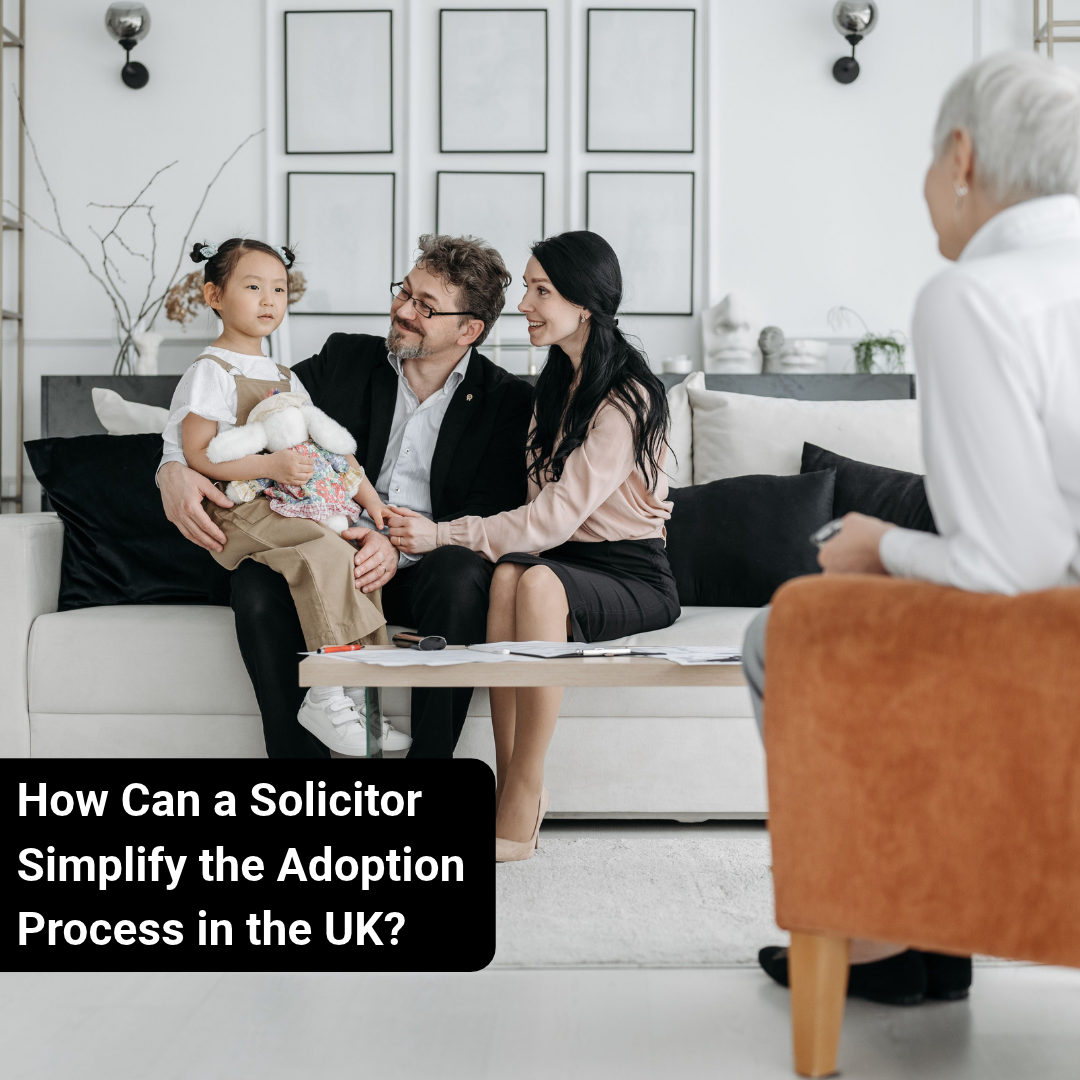
A solicitor can explain which legal rules apply to you, prepare and check your paperwork, advise on birth parent consent and support you through court. They advise on the law. The agency and the court keep their own roles.
Here's what that looks like in practice.
Explaining Adoption Laws and Eligibility
In England and Wales, GOV.UK says you may be able to adopt if you're 21 or over, with no upper age limit. You can be single, married, in a civil partnership, an unmarried couple or the partner of the child's parent. You also need a fixed home in the UK and at least a year's UK residence before you begin.
A legal solicitor checks how those rules apply to your situation and flags any obstacle early. The route matters too. Adopting through an agency, adopting a stepchild and adopting a relative each follow different rules.
And because adoption law differs across the UK, a solicitor makes sure you follow the right nation's procedure. That's worth remembering if you're comparing adoption solicitors UK-wide: the law that applies depends on where the adoption takes place.
Preparing Legal Documents and Court Applications
An adoption order is applied for in the family court, using a set form and supporting documents such as the child's full birth certificate. A family solicitor can identify the right application, check that your documents are accurate and complete, and explain deadlines and hearing requirements. They can also tell you what information the court is likely to ask for.
Mistakes in paperwork can slow things down. A second pair of eyes helps.
Advising on Consent and Parental Responsibility
Both birth parents normally have to agree to an adoption. The exceptions, as GOV.UK explains, are where a parent can't be found, can't give consent because of incapacity, or where the child would be put at risk if they weren't adopted. The court decides whether consent can be set aside, with the child's welfare in mind.
An adoption solicitor explains how those rules apply to your facts, what an objection could mean and which options are open to you. They'll also explain what an adoption order does. It gives the adopter parental responsibility, and in a step-parent adoption it removes that responsibility from the other birth parent.
Representing You When Complications Arise
Sometimes a case becomes contested. A parent may object or can't be traced, or a procedural problem appears. A solicitor for adoption can explain what the court's directions mean, help you respond to challenges, prepare you for hearings and represent you where appropriate.
What they can't do is promise a result. That decision belongs to the judge.
Coordinating With Other Professionals
Adoption involves several people and organisations, so it helps to know who does what.
A solicitor works alongside these professionals. They don't stand in for them.
What Are the Main Stages of the Adoption Process?
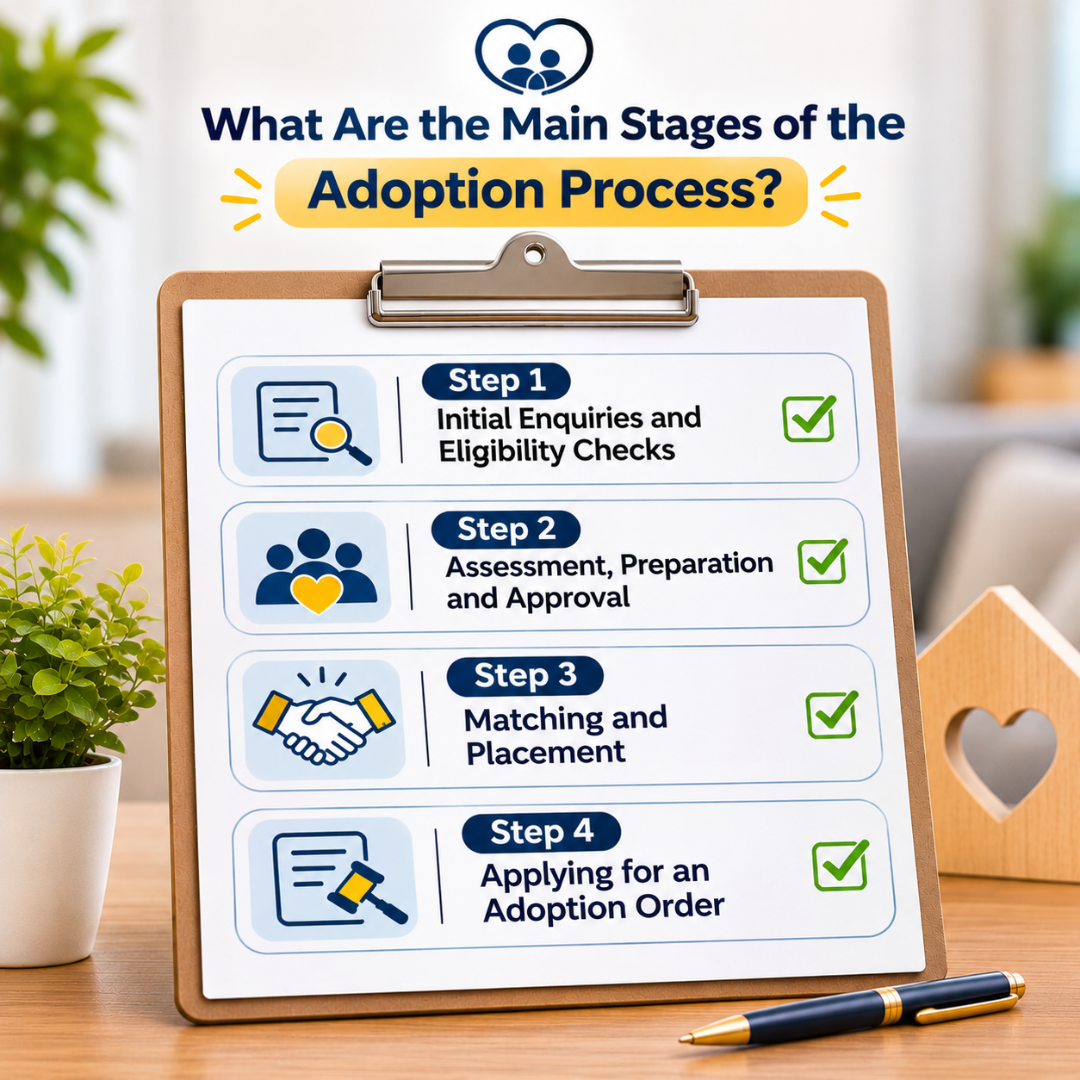
The exact route depends on the type of adoption and where you live. For agency adoption in England and Wales, though, the journey usually follows four stages. Step-parent and relative adoptions work differently, as the next section explains.
Step 1: Initial Enquiries and Eligibility Checks
You start by contacting an adoption agency, either your local council's adoption service or a voluntary agency. You talk through your circumstances, and the agency helps you see whether you may be eligible. If you go ahead, you register your interest, and the agency begins its checks.
Step 2: Assessment, Preparation and Approval
This stage is the agency's job, not a solicitor's. You attend preparation sessions, and a social worker assesses you through visits, background checks and medical information. Their report then goes to an independent adoption panel, which makes a recommendation. The agency decides whether you're suitable to adopt.
This stage often takes several months, so it helps to plan for that. If an agency turns you down, there are ways to challenge the decision, and a solicitor can explain them.
Step 3: Matching and Placement
Once you're approved, you may be matched with a child. The agency considers whether the match is right, and a panel looks at the proposed placement. Introductions usually come before the child moves in.
Step 4: Applying for an Adoption Order
After the child has lived with you for the required period, you can apply to the family court for an adoption order. Your social worker can confirm how long that is. The order is what makes the adoption legal, and the court must treat the child's welfare as its main concern.
This is often where legal support becomes most useful. The application is formal, and the consequences are lasting.
What Happens at the Final Hearing?
At the final hearing, the judge checks that the legal conditions are met and considers whether adoption is in the child's best interests for life. If the court makes an order, the adopters become the child's legal parents, and the order is permanent. Parental responsibility moves to them, and earlier court orders, such as contact orders, are cancelled.
An adoption order also has important implications for a child's inheritance rights. In England and Wales, an adopted child is generally treated in law as the child of their adoptive parents, which can affect their entitlement to inherit if a parent dies without leaving a will. If you've adopted a child, it's worth understanding how your estate would be distributed to help protect your child's future. Read our guide to inheritance without a will to find out who may inherit your assets.
Does Your Type of Adoption Change the Legal Process?
Yes. The goal is the same, but the route can look very different.
Adopting Through an Approved Agency
The agency handles assessment, preparation, matching and support. A solicitor's role is legal: advising on the court application, the effect of the order and any unexpected issues. Because the agency leads the process, you may not need a solicitor at every stage. Some adopters want advice at the court stage or when a problem appears.
Step-Parent Adoption
A step-parent can apply to become a child's legal parent alongside their partner. GOV.UK says you must tell your local council at least three months before applying to court, and the child must have lived with you for at least six months. Consent matters, and so does the child's welfare. If an order is made, the step-parent gains parental responsibility alongside their partner, and the other birth parent loses it.
What If the Other Birth Parent Objects?
Disagreement makes an application more complicated, and the right approach depends on the circumstances. The court, not the solicitor, decides whether the adoption can go ahead without that parent's agreement. A solicitor can explain what the court will look at and what your options are.
Adoption by a Relative or Family Member
A grandparent, aunt or uncle may feel adoption is the natural next step. It's worth getting advice first, because adoption changes legal relationships. A grandparent who adopts, for instance, becomes the child's legal parent, and the child's birth parents stop being legal parents. Some families want security without that change.
Could Another Legal Arrangement Be More Suitable?
Possibly. Depending on the child's circumstances, a parental responsibility agreement or order, a child arrangements order or special guardianship may give legal authority without ending the birth parents' legal status. Fosters Legal's family law team advises on parental responsibility orders, step-parents' rights, grandparents' rights and special guardianship orders. The right option depends on the child's needs and the legal effects your family wants.
When disagreements arise over parental responsibility or child arrangements, going straight to court isn't always the only option. Family mediation may help parents or family members reach an agreement without lengthy proceedings, where it is suitable and safe to do so. If you're unfamiliar with the process, read our guide to what a MIAM involves and understand when a mediation information and assessment meeting may be required before making certain family court applications.
Adopting a Child From Overseas
Intercountry adoption adds more rules and approvals. A UK agency assesses you as eligible and suitable. For Hague Convention countries, your application also goes through the UK Central Authority for a Certificate of Eligibility, and the child needs immigration clearance. The rules differ by country, so take specialist advice before you make arrangements or bring a child to the UK. GOV.UK has the official starting point.
What Challenges Can a Solicitor Help You Avoid?
Some problems come up again and again. Knowing them in advance gives you a head start.
- Incomplete paperwork: Missing or inconsistent information can cause delays or extra work.
- Misunderstood consent rules: Families may not know whether consent is needed or how an objection would be handled.
- The wrong legal route: Adoption isn't always the best fit. Another arrangement may suit the relationship and the circumstances better.
- Unrealistic timescales: Assessments, matching and court proceedings all take time. A solicitor can't speed up the agency or the court.
- Losing sight of the child's needs: Decisions must focus on the child's welfare, not only the adults' wishes.
Why Is Early Legal Advice Worth Considering?
Early advice gives you time. You can find out which route suits you, spot issues before they become harder to fix and prepare for the procedures ahead. It won't remove every delay or guarantee approval. But it can mean fewer surprises
How Much Do Adoption Solicitors in the UK Cost?
There's no single price. Fees depend on the type of adoption and how complicated the case is. An agreed step-parent application is likely to involve less work than a disputed one.
Solicitors may charge by the hour or offer fixed fees for defined pieces of work, depending on the firm. A good quote explains what's included. Disputed applications and extra hearings can add to the cost. You'll also need to allow for disbursements, which are costs paid to others on your behalf, such as court fees and certificates. If you're on a low income, you may be able to get help with court fees.
Legal aid depends on your circumstances and the current rules. It isn't available for every adoption matter, so check GOV.UK's legal aid guidance.
At your first meeting, ask about fees, disbursements and exactly what the solicitor will and won't do. You can also read about Fosters Legal's
family law fees on its website.
How Can You Prepare for Your First Meeting With a Solicitor?

A little preparation helps you get more from the meeting.
Documents and Details to Bring
- Information about your relationship to the child
- Details of any existing court orders or parental responsibility
- Letters from an adoption agency or local authority
- Anything you know about consent, objections or earlier proceedings
- Your questions about timescales, fees and next steps
If you have them, bring the child's full birth certificate and any marriage or civil partnership certificate. The court asks for these.
Questions Worth Asking
- Which legal process applies to my circumstances?
- What obstacles might come up?
- What will you handle, and what will the adoption agency handle?
- What costs should I expect?
- What should I do next?
Key Takeaways
- A solicitor can explain the legal requirements and help you understand the adoption process.
- Legal support can include preparing applications, advising on consent and helping with disputes.
- Adoption agencies and social workers handle assessment and matching.
- Step-parent, relative and overseas adoptions raise different legal questions.
- An adoption order has permanent legal consequences, so informed advice matters.
- The right approach depends on your circumstances and where the adoption takes place.
Take the First Step Towards a Clearer Adoption Journey
Adoption can be one of the most rewarding things a person does. It's also a big legal decision, and it deserves clear information.
Speaking to one of the adoption solicitors UK families rely on won't make the process effortless. But it can make it clearer. A family lawyer can explain the rules, prepare the application, advise on consent and help if complications arise, while the agency and the court do their own jobs. The right route depends on your circumstances and the nation where you live.
If you're considering adoption or facing a legal issue involving a child, speaking to a
family law solicitor can help you understand your options and the next steps. You can contact the Fosters Legal family law team to talk through your situation. The firm has offices in Stevenage, Peterborough and Watford, and offers remote consultations.
Do You Legally Need a Solicitor to Adopt a Child in the UK?
No, a solicitor isn't compulsory in every adoption. Specialist advice is worth considering where your application is complex, disputed or unusual, for example when consent is uncertain.
Agency adopters get support from their agency and social worker. Step-parent and relative applications can involve more legal decisions, so advice is often worth having.
How Long Does the Adoption Process Take in the UK?
There's no single timeline. Assessment, approval, matching and court proceedings all vary, so ask for an estimate based on your own circumstances.
The type of adoption makes a difference too. An agency adoption, a step-parent application and an overseas adoption each follow different steps. A contested case can take longer.
Can a Single Person Adopt a Child in the UK?
Yes. In England and Wales, GOV.UK says you may be able to adopt if you're 21 or over and single, married, in a civil partnership or part of an unmarried couple.
Suitability is assessed individually, and the rules depend on the nation and the type of adoption.
Can a Birth Parent Stop an Adoption From Going Ahead?
Not automatically. A birth parent's objection matters, but the outcome depends on the circumstances, the consent rules and any existing court orders. In certain legally defined situations, the court can proceed without consent.
The court decides, with the child's welfare as its main concern.
What Happens After an Adoption Order Is Granted?
The adopters become the child's legal parents and hold parental responsibility. The child's legal relationships with birth parents change, and earlier court orders are cancelled. The order is permanent, with only very limited exceptions.
The court may also consider whether any contact or information-sharing with the birth family is appropriate.
Frequently Asked Questions