What Are the New Requirements for British Citizenship in the UK?
What Are the New Requirements for British Citizenship in the UK?
British citizenship gives you a permanent place in the UK. You can vote, hold a British passport and live here without immigration conditions. For many people, it is the end of a long journey.
Most adults get there through naturalisation. Some people can register instead, depending on their family ties or existing nationality. Either way, the Home Office checks several things: your immigration status, your time in the UK, your trips abroad, your English and your character.
Immigration policy has also been in the news. The government has set out "earned settlement" reforms that mainly affect how people reach indefinite leave to remain (ILR). Citizenship rules sit in separate legislation, but they may follow.
This guide covers eligibility, documents, tests, the application steps, costs and timings. It also explains when a
solicitor can help.
Fosters Legal Solicitors advises people on nationality matters, so you will find that perspective throughout.
Last reviewed: October 2026. Rules and fees change. Please check GOV.UK before you apply.
Who Is Eligible for British Citizenship in the UK?
Most adults need to be 18 or over, hold ILR or settled status, and have lived in the UK for the qualifying period. They must also show good character and meet the English and Life in the UK Test requirements. Meeting every condition still does not guarantee approval.
What Are the Main Requirements for Naturalisation in Britain?
Here are the core criteria for UK citizenship on the standard adult route:
- You are aged 18 or over.
- You have lived in the UK lawfully for the qualifying period.
- You hold ILR or settled status, or another qualifying position.
- You meet the English language and Life in the UK requirements, unless exempt.
- You are of good character and have followed immigration rules.
Can You Apply for UK Citizenship After ILR or Settled Status?
Yes, but timing matters. Most applicants must wait 12 months after receiving ILR or settled status before they apply on the five-year route.
Spouses and civil partners of British citizens are treated differently. They do not need to wait that extra 12 months once they hold ILR. They must still meet every other requirement.
Can You Apply for UK Citizenship After Living in the UK for Three Years?
Yes, if you are married to, or in a civil partnership with, a British citizen. This three-year route also requires you to hold ILR or settled status. The residence and absence rules for that route are shorter, and we cover them below.
Marriage alone does not make you a citizen. You still apply, pay the fee and satisfy the same checks on character, English and the Life in the UK Test. Many couples assume the process is automatic. It is not.
Can You Get British Citizenship Through Birth, Parents or Family?
Sometimes. Being born in the UK does not automatically make someone British. It often depends on the parents' status at the time of birth.
A child may also be British through a British parent, subject to the rules that apply. Registration routes exist for certain children and some adults. Because these cases turn on dates and family history, specialist advice can help you confirm what nationality rights you already hold.
Once you know which route fits, the next question is time. How long must you have lived here?
What Are the UK Citizenship Residency Rules and Absence Limits?
Residence is where many applications go wrong. The Home Office counts days, not months, and it checks the dates carefully. A small miscalculation can undo years of waiting.
Three things matter here. First, how long you have lived in the UK. Second, how many days you spent abroad. Third, whether your immigration history is clean; let's take each in turn.
How Many Years Must You Live in the UK Before Applying?
Under the standard route, you generally need five years of qualifying residence. Under the spouse or civil partner route, it is generally three.
You must also have been physically in the UK on the date that marks the start of the qualifying period. In practice, that means five years before your application date, or three years on the spouse route. Check your dates carefully before you submit. Missing that day by even one day can cause problems.
How Many Days Can You Spend Outside the UK?
The usual limits are:
- Five-year route: no more than 450 days outside the UK during the qualifying period.
- Final 12 months: normally no more than 90 days outside the UK.
- Three-year spouse or civil partner route: no more than 270 days outside the UK, with the same usual 90-day limit in the final 12 months.
Count every trip, including short holidays and work travel. Your passport stamps and travel records can help you check the total.
Can You Apply for UK Citizenship If You Have Exceeded the Absence Limit?
Possibly. The Home Office has discretion in some cases, but it is not guaranteed. Review your travel history first. If you went over, gather a clear explanation and supporting evidence, such as a letter about a family illness or a work posting.
Does Your Immigration History Affect Your Eligibility for Naturalisation in Britain?
Yes. Your residence must have been lawful, and you must have followed immigration rules throughout. Gaps in permission, overstaying and breaches of visa conditions can all raise questions.
That does not always mean refusal. Each case depends on the route, the dates and the circumstances. Still, an honest review before you apply is far better than a surprise after you pay.
With your residence checked, you can turn to the paperwork.
What Documents Are Required for a UK Naturalisation Process?
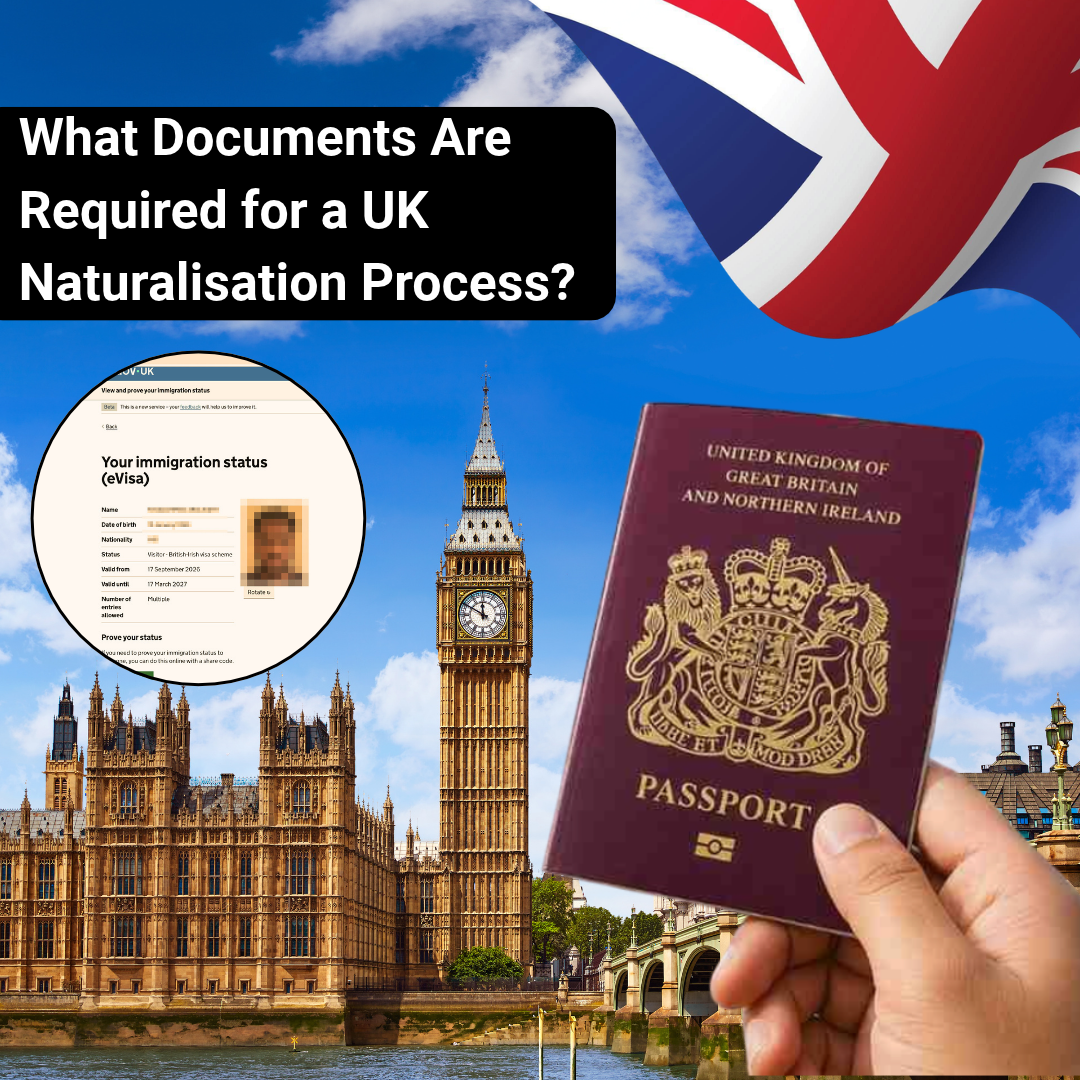
A strong application is a well-organised one. The Home Office wants to see that your story is consistent across every document. Names, dates and addresses should match.
Requirements vary by case. Use the checklist below as a starting point, then confirm what applies to you on GOV.UK.
Naturalisation in Britain Document Checklist
- Your current passport and relevant previous passports.
- Evidence of your immigration status, such as ILR or settled status.
- Evidence of residence and travel history.
- Marriage or civil partnership certificate, where applicable.
- English language qualification, or evidence of an exemption.
- Your Life in the UK Test reference number.
- Evidence of any name changes.
- Details and declarations from your referees.
- Evidence about criminal convictions, immigration issues or other matters you must disclose.
Who Can Act as a Referee for British Nationality?
Referees confirm that they know you and that your identity details are correct. They are not character witnesses in the usual sense, but they do sign a declaration.
In general, referees must be over a certain age, must know you personally and must meet identity requirements. One referee usually needs to be a British citizen. The rules on who qualifies change, so read the current guidance before you ask anyone to sign.
What Happens If You Have Missing Documents or Inconsistent Information?
The Home Office may ask for more evidence. This slows the decision. In worse cases, the application may be refused if requirements are not met.
Typical problems include a name spelt two ways, travel dates that do not match your passport, or a missing certificate. An immigration lawyer can review your papers before submission and flag gaps early.
Once your documents are in order, you need to think about two tests.
Do You Need an English Test and the Life in the UK Test?
Most applicants do. The English requirement proves you can communicate. The Life in the UK Test checks your knowledge of British history, law and everyday life. Some people are exempt, and some can reuse earlier results.
What English Language Level Is Required for Acquiring British Nationality?
Citizenship applicants usually need English at B1 level on the Common European Framework (CEFR), covering speaking and listening. You normally prove this with a Secure English Language Test (SELT) from an approved provider.
Some earlier qualifications may still be accepted. A degree taught in English may also help, with the right evidence. Check the list of approved options before you book.
Who Is Exempt From the Who Can Act as a Referee for British Nationality?
English Test?
Several groups may be exempt:
- Applicants aged 65 or over.
- People with a long-term physical or mental condition that prevents them from taking the test, with suitable evidence.
- Nationals of certain majority English-speaking countries.
Exemptions depend on the rules and your evidence. Do not assume you qualify. Confirm it first.
What Is the Life in the UK Test, and How Much Does It Cost?
The test has 24 questions and lasts 45 minutes. You normally need to answer at least 18 correctly to pass. The booking fee is currently £50.
The official handbook is the best study guide. Practise with the sample questions too. Many people find the detail on dates and laws harder than expected.
Can You Reuse an English Test or Life in the UK Test Pass?
Often, yes. A Life in the UK Test pass can generally be reused, so you do not need to sit it twice. An existing English qualification may also be accepted if it meets the current rules. Confirm your own position before you pay for another test.
With the tests sorted, you are ready to apply.
Step-by-Step Guide to Apply for British Nationality

The process is manageable when you take it one stage at a time. Here is the usual order, from first checks to your passport.
Step 1 – Check Your Eligibility and Immigration Status
Review your residence period, immigration status and travel dates. Look for any problems that could affect your application. It is easier to fix an issue now than after you pay.
Step 2 – Prepare Your Documents and Pass the Required Tests
Gather your evidence. Check that your referees are eligible. Book any outstanding tests, or confirm your exemption.
Step 3 – Complete and Submit the Application
Most adults use Form AN, the naturalisation application. You complete it online, upload or present your evidence and pay the fee.
Take your time. Answer every question accurately and disclose what you must. A solicitor can check your UK naturalisation process application form for errors and inconsistencies before you send it.
Step 4 – Attend Your Biometric Appointment
You may need to give fingerprints and a photograph. The Home Office will tell you how and where. Follow the instructions you receive.
Step 5 – Wait for the Home Office Decision
The usual target is up to six months. Some cases take longer. You must keep valid permission to stay in the UK until the process finishes.
Step 6 – Attend Your Citizenship Ceremony
Successful adult applicants normally attend a ceremony. You make the required pledge and receive your certificate. Only then do you become a British citizen.
Step 7 – Apply for a British Passport
Citizenship and a passport are two separate things. You apply for a British passport after you receive your certificate. The passport application has its own form and its own fee.
DOWNLOAD BRITISH CITIZENSHIP FORM
That brings us to a question every applicant asks: what will all this cost?
How Much Does UK Naturalisation Process Cost in 2026?
Costs rise in stages, so it helps to see the full picture. The Home Office fee is the largest item, but tests, translations and advice add to it. Fees changed in April 2026, and they may change again.
Keep two ideas apart. The citizenship fee is what you pay to become a citizen. The passport fee is a separate charge paid afterwards. They are not the same.
What Is the British Citizenship Application Fee?
For an adult applying by naturalisation, the fee from 8 April 2026 is £1,709. A £130 citizenship ceremony fee comes on top, which makes £1,839 in total. Check GOV.UK for how and when the ceremony fee is collected.
Registration fees differ. Adult registration and child registration each have their own amounts. Confirm the current figure for your route before you apply. The fee is generally not refunded if your application is refused.
What Other Costs Should You Budget For?
- Life in the UK Test: £50.
- English language testing, where required.
- Professional immigration advice or application help.
- Translation or certification of documents, where necessary.
- Travel to appointments and other small expenses.
How Much Do Immigration Legal Fees Cost?
They vary. The price depends on how complex your case is, how much help you want and how the firm sets its fees. Ask for a clear written quote.
Is It Cheaper to Apply for British Nationality Without a Solicitor?
On paper, yes. You can submit your own application. However, advice may be worth the cost if you have long absences, past immigration problems, convictions or doubts about eligibility. A refused application means losing a large fee.
Next, let's look at how long the wait might be.
How Long Does It Take to Get Citizenship of the UK?
Most people want a straight answer here. The honest one is "usually around six months, sometimes longer." Your own timeline depends on the quality of your application and on Home Office workload.
What Is the Standard UK Citizenship Processing Time?
The Home Office aims to decide most naturalisation applications within six months. Individual cases can take longer, particularly where further checks are needed.
Can You Get a Faster Decision on Your UK Citizenship Application?
A faster service may be available to some applicants, subject to eligibility, availability and an extra fee. Check current GOV.UK guidance. No service can promise a particular outcome.
What Can Delay a British Nationality Application?
- Missing or inconsistent documents.
- Complex residence or absence records.
- Questions about good character.
- Requests for further evidence.
- Administrative delays or additional checks.
Delay is frustrating, but refusal is worse. So what can actually stop an application?
What Can Stop You From Getting Citizenship for British?
Several things can. Most are avoidable with early checks. The main ones are good character issues, long absences, gaps in your immigration record and mistakes on the form.
How Does the Good Character Requirement Affect Your Application?
The Home Office looks at your conduct as a whole. Criminal convictions, immigration breaches, dishonesty and other behaviour can all count. The effect depends on the facts and on the current guidance.
Be open. Incomplete disclosure can cause bigger problems than the original issue.
Can You Apply for UK Citizenship If You Have a Criminal Record?
It depends. A record does not lead to the same result in every case. The type of offence, the sentence and how long ago it happened all matter. Read the latest good character guidance, and consider advice before you apply.
Can You Apply If You Have Spent Too Much Time Outside the UK?
Sometimes. The normal limits are 450, 270 and 90 days, depending on the route. The Home Office may use discretion in some cases. Review your travel records before applying, and prepare an explanation if you went over.
What Happens If Your Application Is Refused?
Read the refusal letter carefully. It explains the reasons. Check whether reconsideration is possible or whether a fresh application would be better.
Professional advice is especially useful when the reasons are legal or complex. A fresh application costs another fee, so it pays to understand what went wrong first.
That is where legal help can make a real difference.
How Can Solicitors Help With a British Citizenship Application?
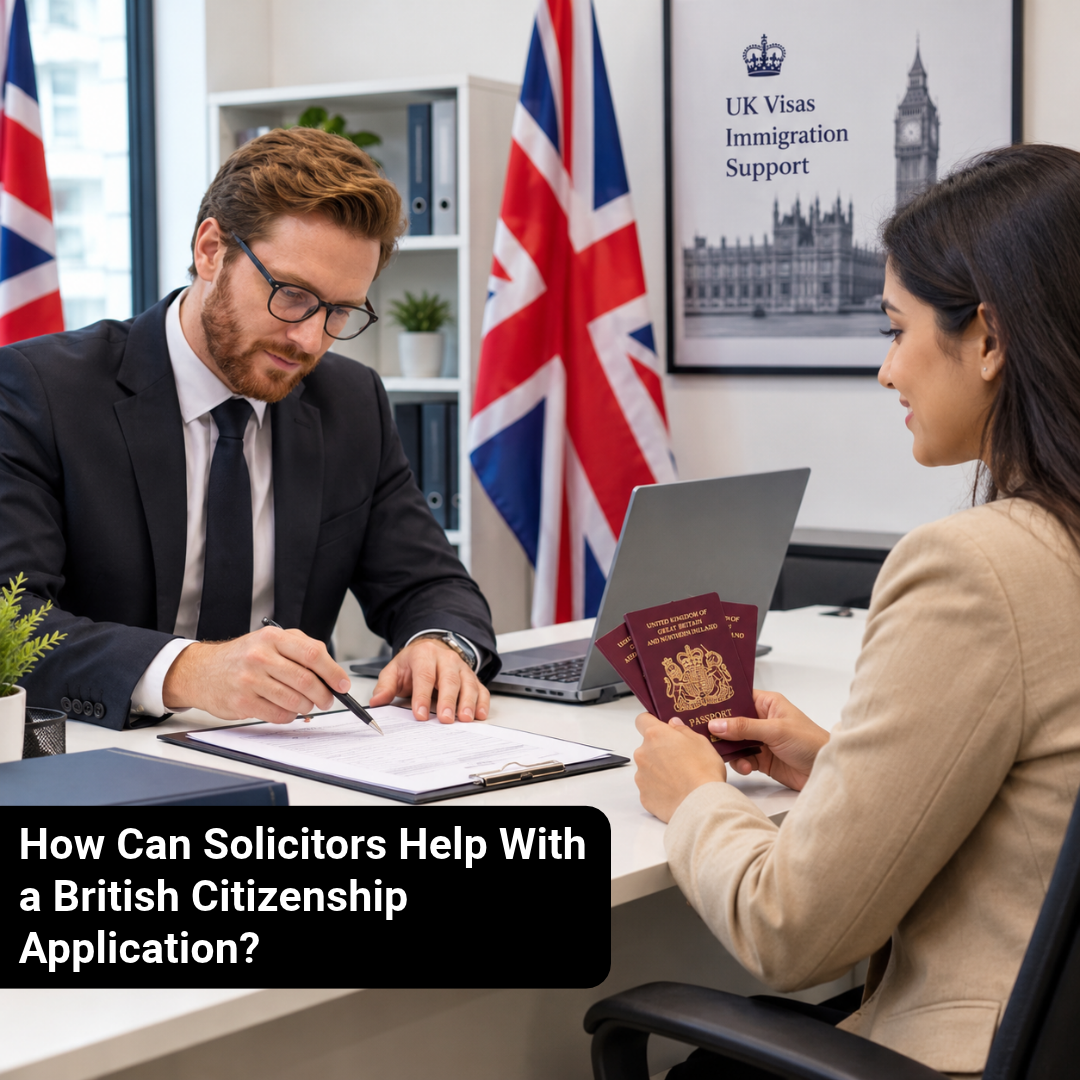
Nothing here is a requirement. You can apply on your own. But a solicitor can spot risks you may not see and help you present your case clearly.
The aim of legal support is not to promise a result. It is to make sure you apply at the right time, with the right evidence, and with eyes open.
How Can Immigration Lawyers Check Your Eligibility?
Immigration lawyers can review your residence periods, immigration status, absences, test requirements and any good character concerns. They compare your history with the rules for your route. That check happens before you pay a fee, which is the best time to find a problem.
How Can a Solicitor for Immigration Help Prepare Your Application?
A solicitor for immigration can review your documents and identify missing evidence. They can also check your declarations and make sure the form matches your real history. Consistent paperwork reduces the risk of questions and delays.
When Should You Contact Legal Solicitors in the UK?
Get advice if your case has complications. Examples include a complicated immigration history, long trips abroad, a previous refusal or unusual family circumstances.
Local support can be useful. Solicitors Peterborough may be able to meet you in person and look at your papers. Some people prefer to work with a legal immigration lawyer who can handle the whole case from start to finish.
Whichever route you choose, look for a firm that explains your options plainly. Good immigration lawyers will tell you when you do not need them, too.
Can Family Solicitors Help With Citizenship-Related Family Issues?
Nationality law and family law are different fields. Family solicitors can help with matters such as divorce, child arrangements and parental responsibility. Nationality and immigration questions usually need a specialist.
Still, family circumstances can shape the evidence you need. A marriage, a civil partnership, parentage or a child's nationality may all matter. If you are exploring family visas, ask whether the firm covers both areas or works with trusted colleagues.
How Employment Solicitors Help With Citizenship of the UK
Employment solicitors and employment lawyers advise on workplace issues, such as contracts, dismissal and pay. They do not normally handle citizenship applications.
However, work records and work-related travel can be useful evidence. If a workplace dispute has affected your immigration status, a solicitor for employment law may help with that part. That is the exception, not the rule. Most citizenship applicants will not need one.
How Much Do Visa Solicitors Charge for Immigration Advice?
Fees vary with the work involved. Some firms charge a fixed price. Others bill by the hour. Visa solicitors will often quote differently for a simple review and for a full application.
Ask for a clear breakdown of what is included. Understand how immigration legal fees will work before you instruct anyone, including what happens if your case changes.
Unsure whether you meet the requirements for citizenship in the UK? Contact Fosters Legal Solicitors to discuss your circumstances, understand your options and get guidance on the next steps in your application.
Prepare for UK Citizenship With Confidence
The path to British citizenship is clear, but it is detailed. Check your eligibility, count your days in the UK, confirm your English and Life in the UK Test position, and gather consistent documents.
Always confirm the current fees and guidance on GOV.UK before you apply. Rules and prices do change, and reform proposals are in the news.
If your case is straightforward, you may feel comfortable applying alone. If it is not, professional advice can help you understand the risks and prepare an accurate application.
Fosters Legal Solicitors would be glad to talk through your immigration and nationality questions whenever you are ready.
Frequently Asked Questions
How Many Years Do You Have to Live in the UK to Get Citizenship of the UK?
Most applicants need five years of qualifying residence. Eligible spouses or civil partners of British citizens may qualify under a three-year route. Other requirements apply, including absence limits, good character, English and the Life in the UK Test.
How Much Does British Citizenship Cost in 2026?
For an adult naturalising, the fee from 8 April 2026 is £1,709 plus a £130 ceremony fee, £1,839 in total. You may also pay for the £50 Life in the UK Test, an English test, translations and legal advice. A British passport costs extra.
Do You Need ILR to Apply for Applying for UK Citizenship?
Most applicants need ILR or qualifying settled status. Many must also wait 12 months after receiving it, unless they are married to a British citizen. Some routes and circumstances have different requirements, so check the one that applies to you.
Can You Apply for UK Citizenship Without Taking the English Test?
Possibly. Exemptions may apply based on age, a long-term condition or nationality. Some earlier qualifications may also be accepted. Confirm your position before you apply, because the evidence you need varies.
Can a Solicitor Guarantee Your UK Citizenship Application Will Be Approved?
No. A solicitor can assess your eligibility, explain the rules and help you prepare an application. The Home Office makes the final decision, and nobody can guarantee the outcome