What Are the New Rules for Migrants in UK?
What Are the New Rules for Migrants in UK?

You moved to the UK planning to apply for Indefinite Leave to Remain (ILR) after five years. You've counted the months. You've kept your payslips. Then the headlines arrive: "ten years", "earned settlement", "new rules". Suddenly the finish line looks like it has moved.
The new rules for migrants in UK in 2026 are a mix of changes already in force, policies the Government has announced, and plans still waiting to become law. Mixing them up is the single most common mistake we see people make.
Immigration eligibility depends on individual circumstances. This article is not legal advice. It reflects official sources as of 14 November 2026, and the rules may change.
This guide separates the three. It covers the new rules on immigration UK-wide, from settlement and skilled worker visas to students, families and refugees. It also tells you what to do next. Nothing here is a promise about your own case, but you'll finish it knowing where you stand.
Key Takeaways
- Earned settlement is announced, not yet law. The Government published its response on 2 November 2026. The Immigration Rules have not yet been changed to bring it in.
- Ten years is the planned default, not a blanket rule. Faster three-year and five-year routes are planned for some people.
- Rules generally apply when you apply. Being in the UK already doesn't automatically protect you, apart from a few named groups.
- Some changes are already live. Skilled worker skills and salary rises started on 22 July 2025. The higher English level for new Skilled Worker applicants started on 8 January 2026.
- Existing ILR and EU Settlement Scheme status are not being taken away.
- If you're close to eligibility, get individual advice before you delay or rush.
An Overview of the Biggest Changes: New Rules for Migrants in UK
The UK is making it harder to qualify for work visas and slower to settle, while keeping faster routes for high earners, key public service workers and people with British family ties. Some of this is law now. The biggest piece, Earned Settlement, is still on its way.
The Government says it wants to reduce net migration, attract highly skilled workers and tighten border controls. It also wants settlement to reflect contribution and integration, not just time spent here.
The starting point was the May 2025 White Paper. A White Paper doesn't change the law by itself. It sets out what the Government intends to do. Most changes then arrive through "Statements of Changes" to the Immigration Rules.
What Are the Main Changes Under the New UK Immigration Rules?
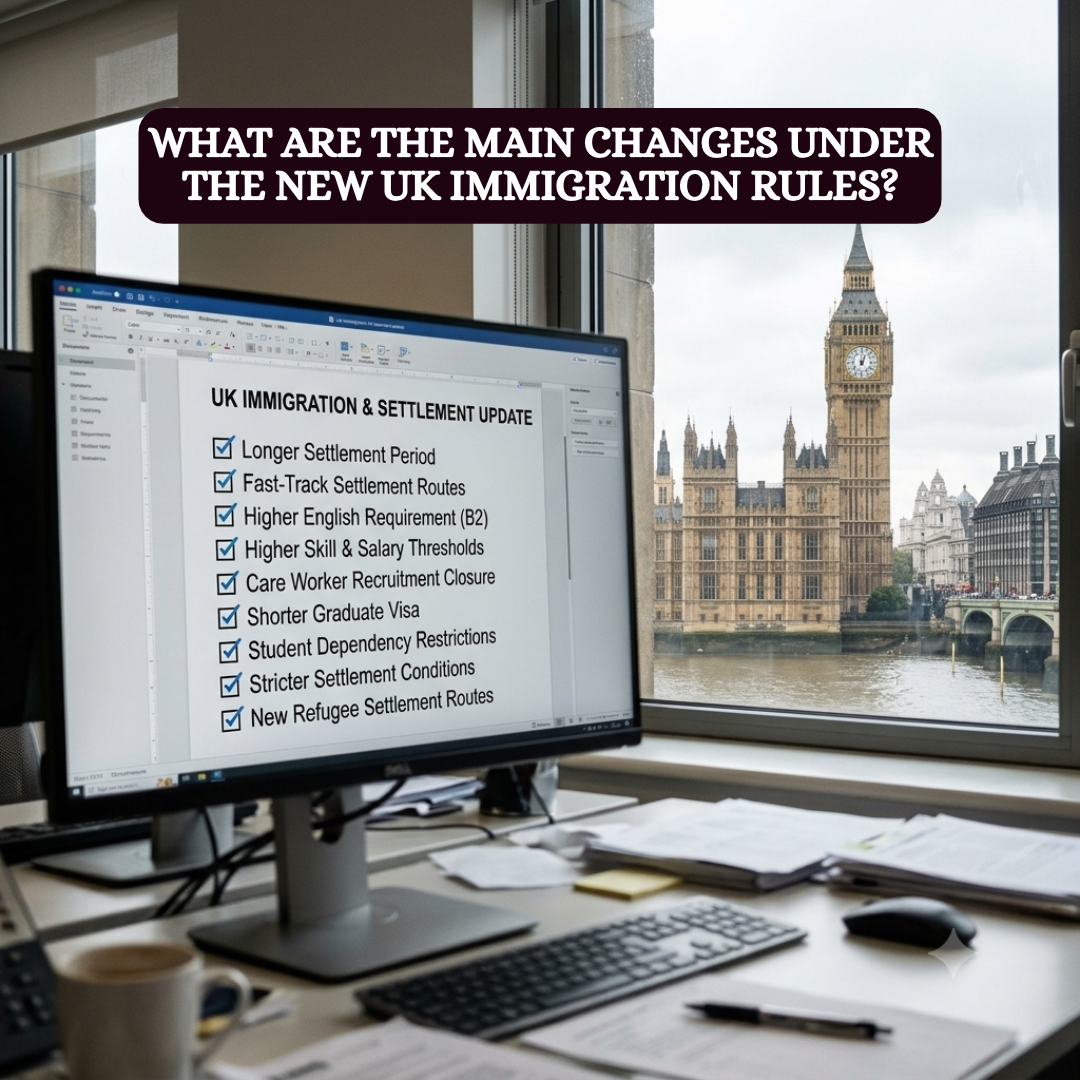
Here are the headline changes. Some are in force. Some are planned.
- A planned move from five to ten years as the standard settlement period.
- Planned faster three-year and five-year settlement routes.
- A higher English requirement (B2) for new Skilled Worker applicants, already in force.
- Higher skill and salary requirements for Skilled Worker visas, already in force.
- Closure of overseas recruitment for care workers and senior care workers, already in force.
- A shorter graduate visa from 1 January 2027.
- Tighter limits on students bringing dependants, in force since 2024.
- Tougher settlement conditions on criminal records, debt and English.
- New settlement pathways for refugees
Which New Immigration Rules Are Already in Force and Which Are Coming in 2027?
This is the section to bookmark. An announcement is not an immigration rules change. And a rule change is not live until its start date.
One point of caution. Some sources list the consultation response as 12 November 2026. Official records and legal commentary give 2 November 2026 as the date, so that's what we use here.
Why Has the UK Government Introduced New Immigration Rules?
The Government argues the old system let too many people settle on time served alone. It wants a system that rewards skills, earnings and good conduct. Critics argue the changes are too harsh and too uncertain. Both views are part of the debate.
What Is the UK Immigration White Paper and What Does It Mean for Migrants?
The White Paper, Restoring Control over the Immigration System, was published on 12 May 2025. It set out plans to raise skill levels for work visas, reduce reliance on overseas recruitment and strengthen employer sponsorship rules. It also first proposed doubling the standard settlement wait from five to ten years.
For migrants, the practical meaning is simple. The White Paper was the direction of travel. The detail has been arriving in stages ever since.
Why Is the UK Moving Towards an Earned Settlement System?
The Home Secretary, Shabana Mahmood, has said settlement "should not be automatic" and “should be earned”. In practice, that means looking at your earnings, your National Insurance record, your conduct and your English.
The Government's own forecast suggests that, without reform, around 1.9 million people would have settled between 2026 and 2030. It estimates over 500,000 of them would settle later. That's a forecast, not a count of people affected.
So here's the question on a lot of minds. If you've already spent four years in the UK, will your original plan still work? The answer is: it depends on your route, your income and the date you apply. We'll get to it.
Will the New UK Immigration Rules Change the Time It Takes to Get Indefinite Leave to Remain (ILR)?
Yes, for many people, once the new rules take effect. But the current rules still apply today. And ten years is not the answer for everyone.
ILR lets you live in the UK without time limits on your stay. For many people on work and partner routes, it currently comes after five years.
Is the UK Changing the Five-Year ILR Rule to Ten Years?
That's the plan, but it isn't law yet. The Government's response says ten years will be the new default. It also introduces shorter and longer routes depending on your circumstances.
As of 8 November 2026, no Statement of Changes had been laid to bring Earned Settlement in. The Home Secretary told Parliament that changes would begin to be laid from December 2026 and be introduced during 2027. Until then, today's qualifying periods continue to apply.
Who Can Qualify for ILR After 3, 5,10 or 20 Years Under the New Rules?
Think of it as four lanes. Which lane you're in depends on contribution and conduct.
Three-Year Settlement Route
This lane is for very high earners and a "Highest Talent Group" that the Government hasn't yet defined. The earnings test is at least £125,141 in three of the four years before applying. Recent public fund use, or an immigration breach, can push you into a longer lane, however high your pay.
Five-Year Settlement Route
One is earning at least £50,271 in three of the last five years. Another is five years in an eligible health or education job, such as doctors, nurses, midwives, teachers and social workers. The third is a British connection, which includes eligible partners, parents and children of British citizens.
Some care workers who joined the route before the White Paper also keep a five-year path. We cover them below.
Ten-Year Settlement Route
Most other people on sponsored work routes will fall here. Time on a student or graduate visa will not count towards this route. The Government has also said the existing Long Residence route will close. No closure date has been published.
Keeping lawful status matters throughout. A gap or a breach can cost you years, not weeks.
Twenty-Year Settlement Route
People with a qualifying immigration breach as an adult, or who have used specified public funds in the five years before applying
What Are the New Mandatory Requirements for Getting ILR?
Whatever lane you're in, the Government says everyone must meet the minimum conditions. Higher earnings cannot make up for missing one. Some children, older people and people with relevant health conditions have exemptions.
Stronger English Language Requirements
The English level for settlement is going up from B1 to B2. Think of it as moving from GCSE level to A-level level in a foreign language. A rule already laid in Parliament brings this in for most settlement applications from 26 March 2027. You'll need an approved test or a qualifying degree.
Criminal Record and Good Character Requirements
This is a big shift. The Government says any adult with a UK criminal record will be refused settlement. That includes suspended sentences, conditional cautions and court fines, not only prison terms. Convictions abroad can count too. Offences committed under 18 are treated differently.
If anything in your past worries you, get advice early. The detailed rules haven't yet been laid.
Tax, Government Debt and National Insurance Contributions
Applicants must have no outstanding government debt. That includes NHS charges, unpaid tax and national insurance, and some Home Office costs. You'll also need to show sustained contribution through earnings.
Couples may be able to combine earnings for the minimum contribution test. The announced household figure is £25,142. The detail is still to come, so don't rely on it yet.
Passing the Life in the UK Test
The Life in the UK test continues, with the existing exemptions. Passing it doesn't guarantee ILR. It's one box on a longer list. If you haven't taken it, there's no harm in preparing early.
Can You Still Get ILR After Five Years Under the New Immigration Rules?
Yes, in some cases. A five-year route remains for people earning above £50,271, eligible public service workers and people with British family connections. A few transitional groups also keep five years.
But five years of living here will no longer be enough on its own for everyone. Check which lane you're in before you make any decisions.
What Happens If You Do Not Meet the New Settlement Requirements?
A longer wait for settlement doesn't mean you can stay without a valid visa. You still need permission to be in the UK for every day of that period.
Depending on your route, you may be able to extend or switch to another route. For some care workers who miss the five-year conditions, the Government has said a further five-year health and care visa will be available. Always secure your next permission before your current one expires.
How Will the New Skilled Worker Immigration Rules Affect Foreign Workers in the UK?
Getting a skilled worker visa is now harder. Jobs generally need to be at degree level (RQF 6), the salary floor is higher, and new applicants need B2 English. These changes are already in force.
Latest Changes to Immigration Requirements for Skilled Workers
From 22 July 2025:
- The skill level rose from RQF 3 to RQF 6 for most roles.
- The general salary threshold rose from £38,700 to £41,700, or the going rate for the job if higher.
- The new entrant rate rose from £30,960 to £33,400.
From 8 January 2026, new applicants need B2 English. People already on the route before that date can generally keep meeting B1 when they extend. You'll also need a valid Certificate of Sponsorship from a licensed employer.
Which Jobs Can Still Qualify for a UK Skilled Worker Visa?
A job offer alone isn't enough. The role must have an eligible occupation code and meet the salary rules. Some roles below RQF 6 can still be sponsored through the Immigration Salary List and the Temporary Shortage List, but these are time-limited and conditional.
Always check the current occupation list on GOV.UK. Don't rely on what a recruiter tells you.
Can Skilled Workers Still Bring Their Spouse and Children to the UK?
Generally yes, for roles at RQF 6 or above. Dependants' permission is tied to the main applicant. But new applicants sponsored in roles below RQF 6 generally can't bring dependants, with limited exceptions.
Families should also remember that the main applicant's settlement lane affects how long everyone waits. Partners who arrive with the main applicant are planned to settle at the same time if they meet the requirements. Partners who join later would need to complete the same qualifying period.
What Has Changed for Overseas Care Workers and Senior Care Workers?
Since 22 July 2025, employers can't sponsor new overseas workers as care workers or senior care workers. People already in the UK on this route have transitional arrangements for extending and switching employers, which the Government has said run to July 2028 in certain cases. Check the details for your situation.
On settlement, care workers who entered or switched into the route before the White Paper keep a five-year path. They must meet the visa conditions, including a £25,000 salary, and the new minimum requirements. Care workers who entered later are expected to fall under the ten-year default.
The Government says care workers who miss the conditions can apply for a further five-year health and care visa, restricted to genuine work in the sector.
What Should Skilled Workers Do If Their Job No Longer Meets the New Rules?
Work through this list before you do anything else:
- Check your occupation code.
- Confirm your employer still holds a sponsor licence.
- Compare your pay with the salary and going-rate requirements.
- Find out whether a transitional arrangement protects you.
- Explore whether another route fits.
- Get regulated advice before changing jobs or letting your visa lapse
How Will the New UK Immigration Rules Affect International Students?
Students have less time after graduation and less scope to bring family. But not every restriction is new, so check what actually applies to your course.
Will International Students Have Less Time to Stay in the UK After Graduation?
For some, yes. The graduate visa is currently two years. For bachelor's and master's graduates who apply on or after 1 January 2027, it becomes 18 months. PhD graduates keep three years.
If you graduate in 2026 and apply before the end of the year, the current two-year period applies. Use that time to find sponsored work. It may be your route to a skilled worker visa.
How Do the New UK Immigration Rules Affect International Students Bringing Dependants?
Most taught postgraduate students starting courses under the rules in force since January 2024 can't bring partners or children. The main exceptions are students on postgraduate research courses and certain government-funded scholarship students.
If you can bring dependants, expect to show relationship evidence and enough money to support them. Check the official student-dependent guidance before you commit to a course.
New English Language Requirements for International Students
Student visa English rules differ from skilled worker and settlement rules. The skilled worker requirement is now B2 for new applicants. Settlement will move to B2 too. Always use an approved test provider.
Can International Students Switch to a Work Visa After Studying in the UK?
Yes, if you meet the skilled worker rules. That means a job at a qualifying level, a licensed sponsor and the salary threshold. Many graduates switch while on a graduate visa.
One longer-term warning. Under the Earned Settlement plans, time on student and graduate visas won't count towards the new ten-year route. So plan your switch with settlement in mind.
What Should International Students Do Before Applying for a UK University?
- Check the university holds a student sponsor licence.
- Confirm your course qualifies for the visa.
- Understand the dependant rules for your course type.
- Prepare your financial evidence.
- Think about your options after graduation.
Your visa conditions do not stop mattering once your course begins. International students must also follow the rules on working hours and permitted types of employment. Even an accidental breach could affect your visa status, so it is worth understanding the
student visa work rules before taking a part-time job.
How Will the New UK Immigration Rules Affect Spouse Visas and Family Members?

The partner route has its own rules, and not every partner is on the same settlement path. A partner of a British citizen is expected to follow a five-year route.
How Do the New UK Immigration Rules Affect Spouse Visas?
A spouse or partner visa is different from a dependent visa. A partner visa is for the partner of a British citizen or settled person. A dependent visa is for the family of someone on a work or study visa.
For most new partner applications, the minimum income requirement is currently £29,000, but check GOV.UK because family rules have been under review. You'll also need relationship, accommodation and English evidence.
Will Spouses and Children of Skilled Workers Need to Wait Longer for ILR?
Possibly, if the main applicant falls into the ten-year lane. Partners who arrive together are planned to settle together. Children under 18 are planned to settle with their parents, with exemptions from the income, English and Life in the UK tests. Criminality rules still apply.
Young adults aged 18 to 24 who are still dependants are planned to settle with the family. People aged 25 or over would be expected to qualify independently or move onto another route.
Can Family Members Still Apply for a UK Visa Under the Updated Regulations?
Yes. The main options are:
- Spouse and partner visas.
- Dependant child visas.
- Family routes for some other relatives.
- Protection-related family routes.
- Extensions and switching, where eligible.
What Documents Are Needed for a UK Spouse or Family Visa?
- Marriage or civil partnership certificate.
- Evidence of a genuine and ongoing relationship.
- Financial evidence.
- English language evidence, where required.
- Accommodation evidence.
- Valid passports and identity documents.
What Are the New UK Immigration Rules for Refugees and Asylum Seekers?
The Government plans four settlement pathways for people with protection. Which one applies depends on how someone arrived and what status they hold.
How Will the New Rules Change Refugee Settlement in the UK?
As announced:
- Safe and legal routes: five years.
- Protection Work and Study: ten years.
- Core Protection: 20 years.
- Illegal entry: an extra ten years on top, with an exception where Article 31 of the Refugee Convention applies.
These are settlement waiting periods. They are not the length of the permission someone is granted at any one time.
Will Asylum Seekers Who Are Already in the UK Be Affected?
Asylum claims, refugee status and ILR are three different things. People who claimed asylum before 2 March 2026, other than on safe and legal routes, are planned to move to Core Protection. The Government says time already spent with refugee status will count. More detail is still to come.
Check the date of your claim and your exact status.
What Options Are Available to Refugees and Asylum Seekers Under the New Rules?
Maintain your lawful status. Look at the protection and family routes that apply. If you have a decision to challenge, ask whether an appeal or review is available. Asylum law is complex, so specialist advice is often worth finding early.
What Support Is Available for Refugees and Newly Arrived Migrants?
- Local authority housing and integration support.
- English language classes.
- Employment and skills programmes.
- Legal aid, where eligible.
- Charities and migrant support organisations.
Border Checks, Documents and Entry Requirements
What you need at the border depends on your nationality, your visa and why you're travelling. Having the right visa and documents doesn't guarantee entry, but missing ones can stop you from boarding.
Essential Documents for New Arrivals at Border Control
Depending on your route, carry:
- A valid passport or travel document.
- Your visa or proof of immigration permission, where required.
- An Electronic Travel Authorisation (ETA), where applicable.
- Proof of your job or Certificate of Sponsorship, for work routes.
- Your Confirmation of Acceptance for Studies (CAS), for students.
- Accommodation and financial details, where relevant.
- Evidence of why you're travelling.
Will Migrants Need an Electronic Travel Authorisation (ETA) to Enter the UK?
An ETA is a digital travel permission for some visitors who don't need a visa. If you're coming to work, study or live in the UK, you'll normally apply for a visa instead.
An ETA is not a visa, and it doesn't guarantee entry. Check the GOV.UK ETA guidance for who needs one, who is exempt and the current fee.
What Happens If You Arrive in the UK Without the Correct Documents?
You may be refused boarding or refused entry. Common causes are wrong visa details, expired documents and missing supporting evidence. Check your visa dates and conditions well before travel, and fix problems before you fly.
How Can New Migrants Prepare for Their First Arrival in the UK?
- Check your visa conditions.
- Keep documents in your hand luggage.
- Understand any work or study limits.
- Arrange accommodation and money.
- Register with a GP once settled.
- Learn how to access and prove your digital immigration status (your eVisa).
How Will the New Immigration Rules Affect Migrants Already Living in the UK?
Yes, they may. The Government's position is that settlement rules apply on the date of decision, not the date you arrived. A small number of groups have specific protection.
Will Existing Visa Holders Have to Follow the New Immigration Rules?
Your current visa stays valid on its current terms. But your next application, especially for settlement, will generally be judged under the rules in force when it's decided.
Being in the UK doesn't give an automatic right to settle on the rules that existed when you arrived. That's the Government's stated position.
What If You Have Already Completed Four or Five Years in the UK?
If you’re approaching five years on a skilled worker visa, the planned rules could change your settlement route. Your pay and the type of job you do may decide which lane you fall into.
Until new rules take effect, current ILR rules apply. If you’re already eligible, applying sooner may be sensible. But submitting too early or with gaps in your evidence can backfire. Individual advice is worth it here.
Will People Who Already Have ILR or Settled Status Be Affected?
The Government has said existing settled status will not be removed. The EU Settlement Scheme is not affected by the Earned Settlement reforms. Keep your status evidence safe, and remember settled status can still lapse under existing rules, for example, after a long period outside the UK.
Which Migrants Have Transitional Arrangements Under the New Rules?
The announced arrangements cover defined groups who were already here before May 2025:
- Care workers who entered or switched into the route before 12 May 2025 and meet the conditions.
- Some health and education workers are below degree level on national pay scales.
- Skilled workers sponsored before April 2024, who can extend on their current terms until 2035. Their settlement period still moves to ten years for roles below degree level.
- Children and young adults in specified circumstances.
- Groups on separate pathways, such as British National (Overseas) visa holders, Armed Forces members and Windrush cases.
Most of these groups will still need to meet the new minimum requirements, including B2 English and the criminality rule, unless an exemption applies.
What Should Existing Migrants Do to Protect Their UK Immigration Status?
- Note your visa expiry date.
- Re-read your visa conditions and sponsorship terms.
- Keep payslips, employment records and National Insurance records.
- Keep evidence of lawful residence and travel dates.
- Start preparing for B2 English if you'll need it.
- Check whether you qualify for a transitional arrangement.
- Get advice before changing routes.
How to Apply for a UK Migrant Visa Under the Updated Regulations?
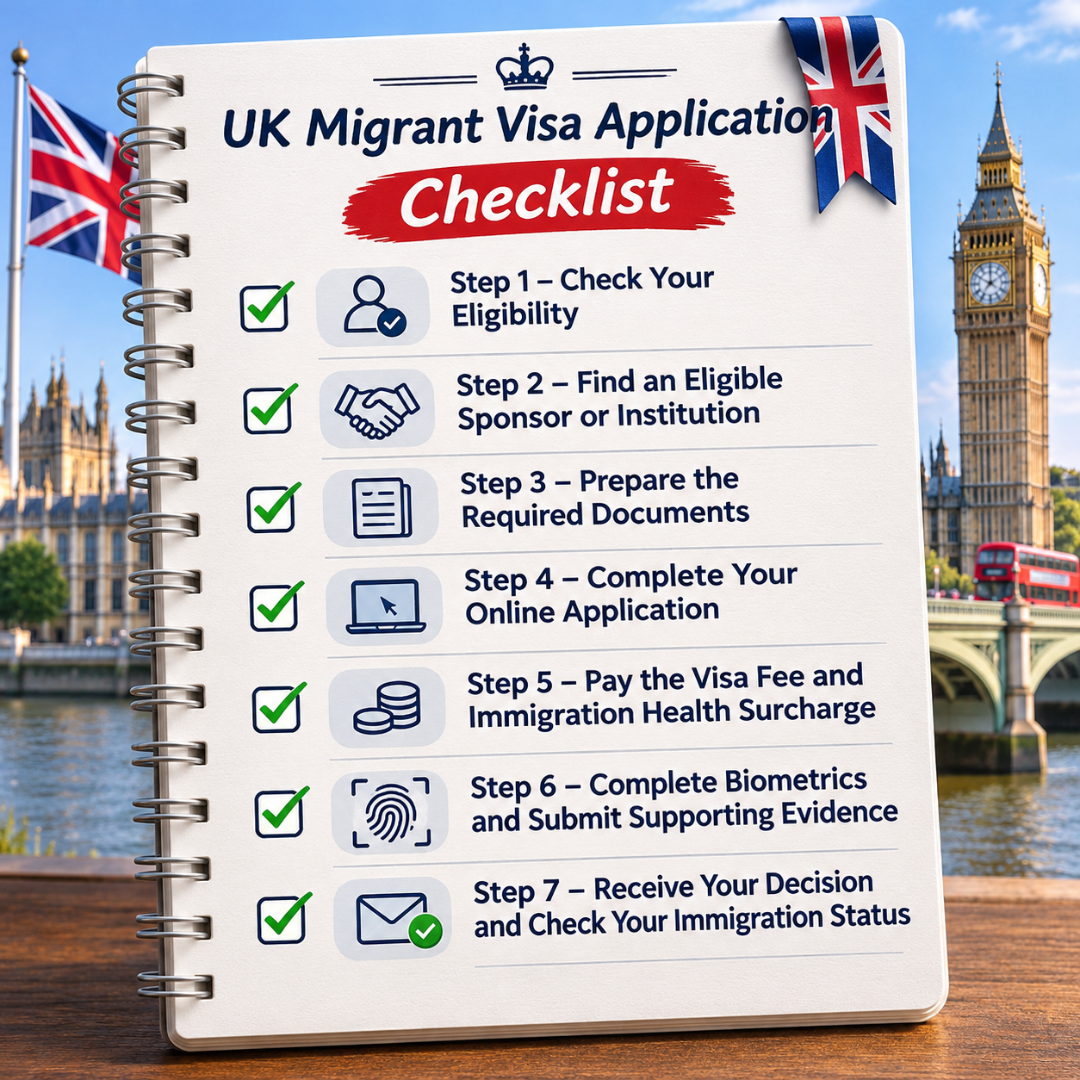
Pick the right route, find an eligible sponsor if needed, gather your documents, apply online, pay, give biometrics and wait for a decision.
Which UK Visa Route Should You Choose?
The main options are Skilled Worker, Health and Care Worker (where still available), Student, Graduate, Family and spouse routes, Global Talent and High Potential Individual. Other work and temporary routes exist too. The right one depends on your job, qualifications, family and long-term plans.
How to Apply for a UK Visa Step by Step
Step 1 – Check Your Eligibility
Read the current GOV.UK guidance for your route. Check skill level, salary, English and funds.
Step 2 – Find an Eligible Sponsor or Institution
Employers and universities must hold the right licence. You can check the Home Office registers online.
Step 3 – Prepare the Required Documents
These vary by route. They may include a passport, Certificate of Sponsorship or CAS, English evidence, bank statements, qualifications, employment history, relationship documents, tuberculosis test results and criminal record certificates.
Step 4 – Complete Your Online Application
Apply through the official GOV.UK service. Take care with every detail. Small errors cause big delays.
Step 5 – Pay the Visa Fee and Immigration Health Surcharge
Fees change often. Check the current figures on GOV.UK before you pay.
Step 6 – Complete Biometrics and Submit Supporting Evidence
You'll prove your identity and upload or hand in your documents.
Step 7 – Receive Your Decision and Check Your Immigration Status
Most people now access an eVisa online. Check the conditions attached to your permission as soon as you get it.
Getting a UK visa is an important step, but it may not be the end of your immigration journey. If you plan to settle in the UK permanently, you should also understand the
rules for British citizenship, including the eligibility criteria, residency requirements and application process.
What Documents Should You Prepare Before Applying for a UK Migrant Visa?
Don't gather everything. Gather what your route needs.
- Work visas: Passport, certificate of sponsorship, English evidence, qualifications.
- Student visas: Passport, CAS, funds evidence, and English evidence.
- Family visas: Relationship evidence, income evidence, accommodation, English evidence.
What Are the Most Common Reasons for UK Visa Refusal Under the Immigration Rules?
- Incorrect or incomplete details.
- Not enough financial evidence.
- Invalid sponsorship.
- Missing English language evidence.
- Weak relationship evidence.
- Missing documents.
- Failing suitability requirements.
What Can You Do If Your UK Visa Application Is Refused?
Read the refusal letter carefully and note the reason. Check whether an administrative review or appeal is available and the deadline. Think hard before reapplying with the same evidence. Get regulated advice before you take another step.
Which Companies Offer Legal Advice for Migrants Under the New UK Rules?

Look for an immigration solicitor regulated by the Solicitors Regulation Authority (SRA) or an adviser regulated by the Immigration Advice Authority (IAA). It's illegal to give immigration advice without proper authorisation.
Immigration rules get complicated fast, especially where settlement, family visas, sponsorship and transitional arrangements overlap. An immigration lawyer can spot problems you won't see yourself. Law firms such as Fosters Legal advise migrants across the UK on visa and settlement questions, and you can ask about your own situation.
How Can You Find a Qualified Legal Professional for UK Visa Advice?
- Solicitors are regulated by the SRA. You can check the SRA register.
- Advisers are regulated by the IAA, which was formerly the OISC. The IAA runs an Adviser Finder tool.
- Specialist immigration firms often focus on a particular visa category.
- Legal aid providers may help with some asylum and immigration cases if you're eligible.
What Should You Check Before Choosing an Immigration Solicitor?
- Experience with your visa category.
- Current authorisation and registration.
- Clear fees, in writing.
- Honest explanations of possible outcomes.
- Written advice.
- Reviews and reputation.
Be wary of anyone who guarantees a result. Nobody can promise a visa decision.
When Should You Schedule a Consultation With an Immigration Law Specialist?
Consider booking one if:
- You're approaching your five-year ILR date.
- Your employer has changed your role or sponsorship.
- You're unsure whether your job qualifies for sponsorship.
- You want to bring a spouse or children.
- You've had a refusal.
- You've overstayed or breached conditions in the past.
- You're worried about how Earned Settlement affects you.
What Questions Should You Ask During an Immigration Consultation?
- Which route suits my circumstances?
- Will the new settlement rules affect my current visa?
- Do any transitional arrangements apply to me?
- What documents should I prepare?
- What are my options if I don't qualify for ILR after five years?
- What are the likely fees and timescales?
What Support Services Are Available for Migrants Adapting to New UK Immigration Laws?
There's more practical help than most people realise, much of it free.
Where Can New Migrants Find Help With Housing, Employment and Healthcare?
- Your local council, for housing support.
- Your GP, for NHS registration.
- Jobcentre Plus and local employment services.
- English language classes.
- Community organisations and migrant support charities.
Can Migrants Get Free Immigration Advice in the UK?
Sometimes. Charities, law centres and clinics offer free advice, and legal aid covers some cases. Citizens Advice gives general guidance. Always check the adviser is authorised to give immigration advice.
How Can Migrants Prepare for Long-Term Settlement in the UK?
- Keep your lawful residence continuous.
- Keep employment and tax records.
- Improve your English.
- Understand the Life in the UK test.
- Avoid immigration breaches.
- Pay government charges and taxes on time.
- Plan extensions well ahead.
How Will the New Rules for Migrants in UK Affect Your Future?
The rules hit different people differently. Here's how to read your own position.
If You Are Planning to Move to the UK in 2026
Research the right route before applying. Check job level and salary. Prepare for English requirements. Understand dependent limits. And think about the longer settlement pathway when you plan your future.
If You Are Already Working in the UK
Review your visa and sponsorship terms. Note which settlement lane you may fall into. Keep your pay and National Insurance records tidy. Ask whether you qualify for a shorter route or a transitional arrangement.
If You Are an International Student
Understand the graduate visa change. Check whether family can join you. Look for sponsored work early. Plan your next application well before your visa ends.
If You Are Planning to Bring Your Family to the UK
Check the dependent or family visa requirements. Look at financial and English conditions. Think about how settlement changes could affect everyone. Get advice where routes overlap.
What Is the Best Way to Stay Updated on UK Immigration Law Changes?
- Follow official GOV.UK immigration announcements.
- Check each new statement of changes to the immigration rules.
- Read Home Office guidance.
- Follow Migration Advisory Committee publications.
- Speak to a regulated adviser when a change touches your application.
What Should Migrants Do Next Under the New UK Immigration Rules?
The new rules of immigration in UK in 2026 are real, and they're still moving. Some are already live. Others are on the way. The impact will be very different for a care worker, a doctor, a student and a partner of a British citizen.
Ten years is not the only outcome. Three-year and five-year routes remain for many people, and nobody who already holds ILR or EU settled status is losing it.
But don't assume your old five-year plan will survive untouched. Review your visa category, your pay, your English and your records. And if you're planning to move, learn today's requirements before you pay a single fee.
If the new rules on immigration have left you uncertain about your visa, settlement eligibility or future in the UK, professional legal advice can help you understand your options. Contact
Fosters Legal Solicitors Ltd to discuss your circumstances and find out how its legal team may be able to assist with your immigration matter.