
What Child Maintenance Covers After Divorce, and Who Pays for What?
What Child Maintenance Covers After Divorce, and Who Pays for What?

Who will ensure your child’s needs are met after a separation? If you’re going through a divorce in Stevenage, Peterborough, or Watford, figuring out finances for your children can feel overwhelming. That’s where child maintenance comes in a structured way for one parent to contribute to everyday essentials like food, clothing, and housing, keeping your child’s life stable despite family changes. But it’s not always straightforward. While the Child Maintenance Service (CMS) covers the basics, things like school trips, hobbies, or extracurricular activities might need separate agreements.
In this guide, we’ll walk you through exactly what child maintenance covers, how it’s calculated, how
legal aid solicitors can make the process easy for you, and the practical steps you can take to make sure your children continue living comfortably. By the end, you’ll have a clear, actionable roadmap without confusion or guesswork.
The Purpose Behind Child Maintenance
When parents separate, life doesn’t pause for the children. That’s why child maintenance exists – to make sure their day-to-day needs are met without disruption.

Keeping Life Stable
Child maintenance ensures your child’s lifestyle remains steady, even if you and your ex-partner live apart. Essentials like meals, school basics, and shelter continue without gaps, giving children a sense of normalcy.
Covering Everyday Essentials
Payments are designed to meet core expenses, such as food, clothing, housing, and basic household needs. This prevents one parent from bearing the burden alone and keeps the child’s home life comfortable and predictable.
Shared Responsibility
Both parents share the responsibility of raising costs, no matter what the relationship status. The non-resident parent contributes regularly, either through the Child Maintenance Service (CMS) or a private agreement.
Understanding why child maintenance exists helps you approach the next step, figuring out exactly what it covers and how to make it work for your child’s needs. Let’s break that down next.
What Does Child Maintenance Usually Cover?
When parents separate, the first question is always, 'Who will look after the children's essentials and expenses?' Understanding the basics ensures your child continues living comfortably without disruption.
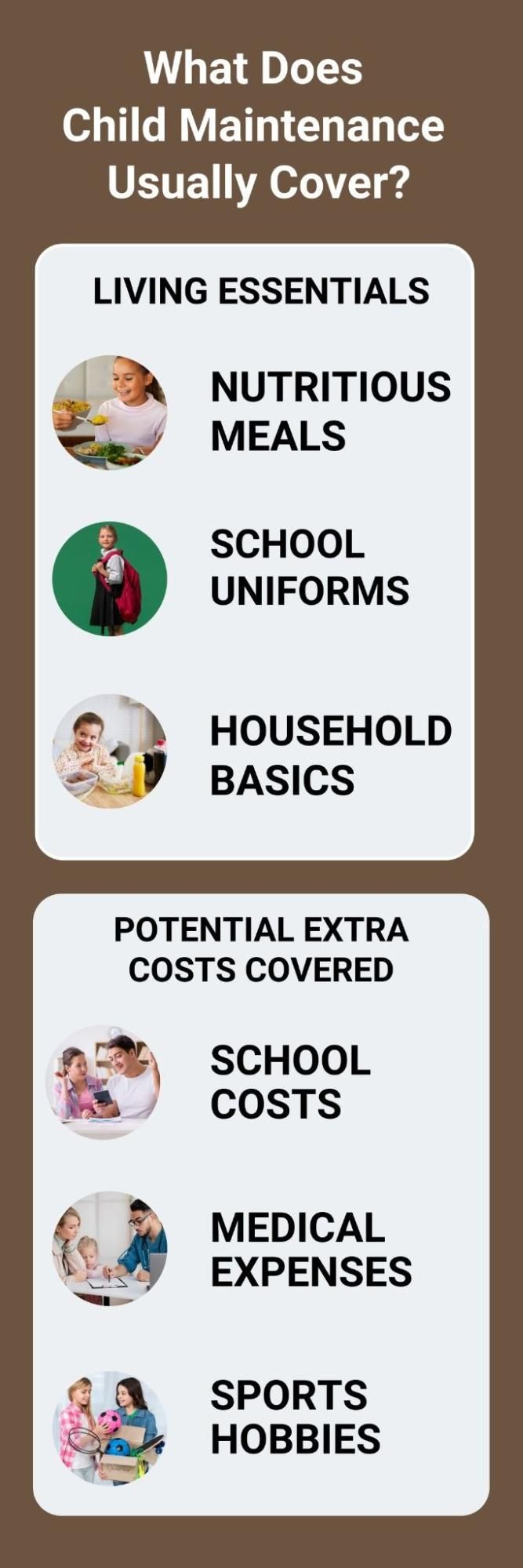
Living Essentials
- Food and Groceries: Child maintenance ensures children have regular, nutritious meals.
- Clothing and Shoes: Payments cover growth-related needs, school uniforms, and footwear. Children can stay comfortable and presentable at school without one parent bearing the full cost.
- Housing Costs: This includes rent, mortgage contributions, and utilities. It keeps your child’s home life stable and consistent, even if parents are living apart.
- Household Basics: From beds and bedding to soap and essential transportation, maintenance helps cover the everyday items children need to thrive.
- Basic Childcare Support: Daily routines like childcare, school drop-offs, and after-school supervision are easier to manage with regular financial contributions.
Potential Extra Costs Covered
- School Costs: Uniforms, books, equipment, and school trips can be agreed upon. This ensures children have everything they need for education without one parent shouldering all expenses.
- Sports, Hobbies, and Lessons: From football practice to music lessons or art classes, these activities can be included in private arrangements. They enrich your child’s development and keep routines consistent.
- Non-Essential Medical Expenses: Optometry, dental check-ups, and prescription costs outside the basics can be shared. Family agreements allow both parents to contribute fairly without disputes.
- Travel Costs: Expenses for visiting the non-resident parent or attending activities can be included. This keeps children connected to both parents and reduces stress over logistics.
Understanding what can be included beyond CMS basics helps parents plan responsibly. Next, we’ll look at how child maintenance is decided and the differences between official CMS calculations and private agreements.
How is Child Maintenance Decided? CMS vs Private
Figuring out who pays what can feel tricky, but understanding the difference between official CMS calculations and private agreements makes it much simpler.
Official Child Maintenance Service (CMS)
- Calculation Based on Income: CMS calculates payments using the non-resident parent’s income and the amount of time they spend with their child. This ensures the support is fair and consistent.
- When CMS Steps In: If parents can’t agree on payments privately, CMS provides a structured way to enforce child maintenance. It removes guesswork and ensures children receive the support they need.
Private Agreements Between Parents
- Flexibility: Parents can agree on extra costs like school trips, hobbies, or travel, tailoring support to their child’s unique needs.
- Amicable Arrangements Work Best: While private agreements aren’t formally enforced, families who communicate clearly often find this approach less stressful and more adaptable.
Who Pays for What
Understanding who is responsible for different costs can make child maintenance clearer and less stressful.
- The Non-Custodial Parent
Typically, the parent with whom the child spends less time pays monthly child maintenance to the custodial parent. This contribution covers essentials like food, clothing, and housing, keeping the child’s daily life stable.
- The Custodial Parent
This parent is assumed to handle their share of everyday costs directly: meals, school routines, and household needs.
- Shared Costs
Extra costs that go beyond basic support, such as private school fees, unusual medical bills, or extracurricular activities, are usually split between both parents.
Next, let’s look at how solicitors can help you navigate this process smoothly and protect your child’s future.
How Solicitors Can Guide You Through Child Maintenance?

Navigating child maintenance can feel like a maze, but the right guidance makes all the difference. At Fosters Legal Solicitors, we combine experience, clarity, and a practical approach to ensure your child’s needs are met fairly.
How do we help?
Evaluating Fair Child Maintenance
We calculate what’s reasonable based on both parents’ income, living costs, and your child’s specific needs. This ensures payments cover essentials without overburdening either parent.- Preparing Agreements That Protect You and Your Child
Whether through CMS or private arrangements, family law solicitors draft agreements that safeguard your child’s future and your legal rights. Clear documentation prevents confusion and disputes down the line. - Representing You in Mediation or Court
If disagreements escalate, divorce lawyers Peterborough step in to mediate or represent you formally, making sure your child maintenance is resolved efficiently and fairly.
Why Do Families Recommend Foster Legal?
People across Stevenage, Peterborough, and Watford trust us for our clear guidance, personalised approach, and proven track record. We focus on practical solutions that actually work in real life.
Client Story
A client, Sarah, came to us confused by unexpected CMS calculations that didn’t match her child’s actual needs. Our
separation solicitors reviewed the case, recalculated support fairly, and set up a private agreement that covered school trips and after-school care. This not only eased financial pressure but also restored peace between her and the other parent.
With expert guidance, child maintenance becomes predictable and manageable.
Practical Checklist for Parents
Making child maintenance work smoothly requires clear steps. Here’s a simple, actionable checklist to help you take control:
1.
Know Your Options: Understand the difference between CMS and private agreements so you can choose what works best for your child and family.
2. List Everyday Costs: Write down essentials like food, clothing, housing, and childcare. Knowing the exact needs makes discussions and calculations accurate.
3. Discuss Extras Early: Talk about school trips, hobbies, or extracurricular activities upfront. Early agreement prevents conflicts later.
4. Keep Records: Track all payments, receipts, and agreements. Clear documentation protects both parents and ensures transparency.
5. Consult a Solicitor: Before signing any agreement, speak with an experienced solicitor. Expert guidance ensures the arrangement is fair, legal, and secure for your child’s future.
Following this checklist makes child maintenance practical, clear, and stress-free, giving your child the stability they need.
Conclusion
Child maintenance isn’t something to fear or get confused about. It exists to protect your child’s day-to-day well-being and ensure their life remains stable, even when parents live apart. Throughout this guide, we’ve covered what child maintenance usually includes, what extra costs can be agreed privately, how payments are decided through CMS or family agreements, and how solicitors can help make the process smooth and fair.
Taking the right steps early, including listing costs, discussing extras, keeping records, and seeking expert advice, makes a real difference for your child and your peace of mind. If you want to ensure your child maintenance arrangement works fairly and protects your child’s future, speaking with a trusted solicitor is the best next step.
Don’t wait; get professional guidance today and make sure your child continues to thrive, no matter the changes in family life.
Frequently Asked Questions
What is the minimum a father has to pay for child support?
In the UK, the minimum child maintenance payment is £7 per week if the paying parent earns under £100 a week or receives certain benefits. This amount is set by the Child Maintenance Service (CMS) and applies regardless of relationship history.
What is and isn’t covered by child maintenance?
Child maintenance usually covers everyday essentials like food, clothing, housing, and basic living costs. It does not automatically cover school trips, uniforms, hobbies, or private medical costs unless parents agree privately.
How much will my ex-husband have to pay in child support?
The amount depends on his gross income, how many children are involved, and how often the children stay with him. CMS uses a fixed calculation, so payments are based on figures, not opinions
What’s the minimum child maintenance payment?
The lowest standard payment is £7 per week, set by CMS for parents on low income or benefits. If income increases, the payment rises in line with official rates.
How much do most men pay for child support?
There’s no single average amount, but many payments fall between 12% and 19% of gross weekly income for one or two children. The final figure always depends on income and shared care arrangements